
 MOVIES
 VIDEO GAMES
 PODCASTS
 VIDCASTS
 STAND-UP



 TV SERIES · 2021
Calls
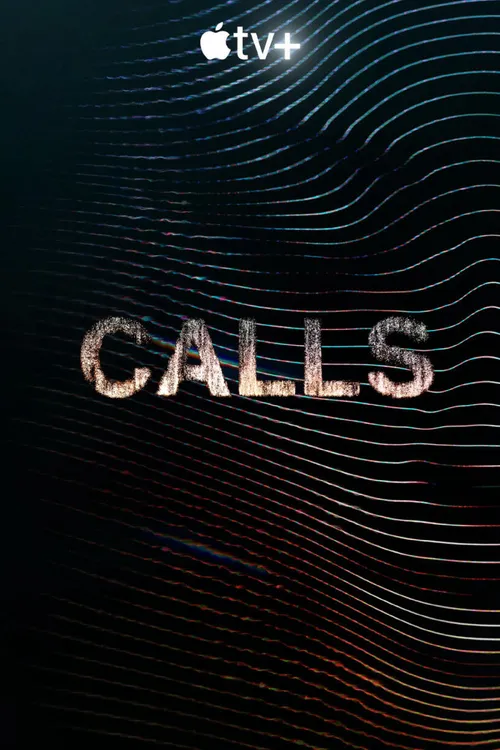
Calls follows interconnected phone conversations among strangers whose lives descend into chaos ahead of an apocalyptic event spanning multiple dimensions.
Calls opens with a series of urgent phone calls that link ordinary people across cities and time zones. One caller reports impossible sightings while another describes sudden disappearances that defy explanation. The conversations reveal overlapping realities where small decisions trigger large-scale disasters. Characters relay warnings about an approaching end without ever meeting in person. The format stays strictly audio, building dread through fragmented details and rising panic. Each call adds pieces to a larger pattern of collapsing timelines.
Later episodes escalate the stakes as callers realize their worlds are merging and ending. Voices describe cities vanishing, loved ones lost to rifts, and last-minute attempts to alter outcomes. The narrative jumps between survivors piecing together the cause and those facing immediate consequences. Relationships form and fracture solely through these calls, driving the final revelations about the event's origin. The series closes on the survivors' uncertain fate after the catastrophe peaks.
Oops! Is this show WOKE?
Only an account holder or member can file. Cite a scene, a line, or a pattern. Other account holders +1 or −1 that argument, once each. The show is not IS WOKE until enough of them have given a +1. Enough −1s remove the write-up, and it is no longer shown.
Sign in to file a woke label. One of each criterion per member.
Comments and reviews
Report a mistake
Same rule as woke labels: one report, a written reason, and the community +1 or −1 it — once per member. A net +5 applies the change. Editors can hold it for review, or apply it immediately.
No mistake reports yet.
Sign in to report a mistake. One report per field, per member.
Member review
June Pell
Oct 20, 2026
8/10Calls caught me off guard in the best way. I put it on one evening when I was too tired for anything with a big visual load, and what started as background noise turned into the kind of hold-your-breath listening I haven’t done since I was a kid with a radio drama tape. The whole thing runs on phone calls between people who never meet, strangers linked by vanishing cities, impossible sightings, and timelines that start folding into each other. You get waveforms pulsing on a black screen and the barest text labels, nothing else. That restraint is the point. Once the voices start overlapping and the panic rises, your brain fills in every missing image harder than any camera could. I kept thinking about how much ordinary life already happens this way. Half the important conversations I’ve had in the last ten years were on a phone while I stared at a wall or the ceiling of a car. You hear the hitch in someone’s breath, the pause before they decide whether to tell you the worst part, and suddenly the room you’re sitting in feels thinner. Calls leans all the way into that. Early on somebody reports something that shouldn’t be possible and the person on the other end tries to stay calm, the way you do when a friend is unraveling. Then the next call picks up a thread from a different city, a different hour, and you realize the same collapse is happening everywhere at once. It never needs to show you a rift or a disappearing skyline. The way a voice cracks while describing it is enough. There is a stretch in the middle where the calls get denser and the stakes jump. Callers start understanding that their separate worlds are bleeding together and that the end isn’t coming so much as already here in pieces. I liked how the show never pauses to explain the rules of the multiverse. It just lets people scramble for last connections, leave messages that might never be heard, try to warn someone who is already gone in another version of the timeline. The dread builds from the fragmentation itself. You are always missing context the way the characters are, and that shared incompleteness keeps everything sharp. One thing that surprised me is how cinematic it feels without pictures. The sound design does the heavy lifting—distant sirens bleeding through a receiver, the sudden dead air when a line drops, the small domestic noises that make a kitchen or a car feel real right before everything tilts. I found myself closing my eyes more than once, not out of boredom but because the images my head supplied were more unsettling than anything a budget could stage. Sound really can be the stronger visual when the writing trusts it. That choice could have felt gimmicky, yet it never did. It stayed disciplined all the way through. I won’t pretend every episode lands with equal force. A couple of the later calls circle the same kind of revelation a little too closely, and once you know the pattern the surprises thin out. Still, the overall shape holds. The apocalypse here isn’t loud or righteous; it’s personal and sideways, arriving through ordinary people who just wanted to check on each other. That grounded quality is what kept me rating it high. Big-concept stories often forget the human scale, but this one never does. Every new voice feels like someone you could have sat next to on a bus. Watching—listening—this also made me notice how rarely I give pure audio my full attention anymore. Playlists and podcasts fill the gaps while I cook or drive. Calls demands the opposite. It wants the lights low and the phone face-down. I gave it that, and the return was a tight, unnerving ride that stayed with me longer than most glossy series. The interconnected structure works because the writers understand that a single well-timed silence can carry more weight than a monologue. When two people realize, mid-call, that the world outside their windows no longer matches, you feel the floor drop without any special effects. Four stars feels right. It is ambitious without being showy, scary without cheap jumps, and formally bold in a way that still serves the story instead of replacing it. I came away grateful for the experiment and a little more aware of how much story can live inside a simple ringing line. If you give it quiet and an open evening, it will do the rest. The collapse it describes is huge, but the way it reaches you is intimate, one voice at a time, and that contrast is what makes the whole thing land.