
 MOVIES
 TV
 VIDEO GAMES
 PODCASTS
 VIDCASTS



 STAND-UP · 1997
Chingo Bling
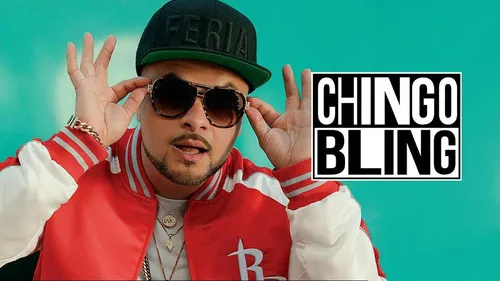
Chingo Bling delivers brash, larger-than-life stand-up that mixes rapper swagger with sharp Tex-Mex cultural jokes and high-energy crowd work. Sets favor rambunctious storytelling and regional humor over tight narrative arcs.
Chingo Bling hits the stage as a loud, charismatic Tex-Mex personality who treats the mic like both a comedy club and a cypher. His persona blends rapper bravado with everyday border-culture observations, leaning on accent play, family stories, and the absurdities of bilingual life in Texas. A typical set moves fast: short setups, punchy tags, and call-outs that keep the room loud. He often brings friends into the mix for banter, turning the night into a loose party rather than a solo monologue. Topics stay close to food, neighborhood codes, dating mishaps, and the gap between Mexican roots and American hustle. The pacing rewards big reactions; he rides laughter and doubles back on winners instead of carefully building a single through-line.
What he returns to most is pride in the culture without turning it into a lecture—jokes land because the room already knows the references. Audiences show up for the unfiltered energy and the sense that the comic is one of them, not a visiting commentator. The feel is communal and rowdy: people expect call-and-response moments, music-adjacent bits, and punchlines that celebrate rather than scold. He keeps the focus on lived detail and exaggerated self-portrait rather than abstract social theory. Nights end on high volume and shared recognition, the kind of set where the crowd leaves still quoting the best lines about tacos, trucks, and family chaos.
Oops! Is this show WOKE?
Only an account holder or member can file. Cite a scene, a line, or a pattern. Other account holders +1 or −1 that argument, once each. The show is not IS WOKE until enough of them have given a +1. Enough −1s remove the write-up, and it is no longer shown.
Sign in to file a woke label. One of each criterion per member.
Comments and reviews
Report a mistake
Same rule as woke labels: one report, a written reason, and the community +1 or −1 it — once per member. A net +5 applies the change. Editors can hold it for review, or apply it immediately.
No mistake reports yet.
Sign in to report a mistake. One report per field, per member.
Member review
Toni Briggs
Oct 9, 2026
8/10I spent the better part of an evening bouncing through Chingo Bling clips, one after another, and the guy does not ease you in. He hits like he walked straight out of a cypher and decided the mic was still his. The first thing that lands is the size of the persona. It is rapper swagger without the apology, loud Tex-Mex energy that treats the stage like a backyard party that somehow got a proper sound system. He talks fast, tags faster, and keeps the room or the comment section loud because the setups are short and the punchlines do not wait for permission. The border bit is the one that stuck with me hardest. “Crossing The Border be like” runs a few minutes and it is pure physical storytelling mixed with that bilingual rhythm he lives in. He is not doing careful anthropology. He is doing the absurdity of the whole ordeal the way somebody who actually grew up next to it would tell it at a cookout, complete with the accents and the side comments that only work if you have heard those conversations your whole life. It is regional humor that does not sand itself down for a national audience that might get nervous. That is the appeal. He assumes you either get it or you will catch up, and he is not slowing the set for the second group. Right after that I hit the potheads clip. Short one, maybe a minute, but it has the same confidence. “Potheads aren’t lazy, they’re creative” is exactly the kind of flip he likes. He takes a lazy stereotype and runs it through neighborhood logic until it becomes a defense of hustle and imagination instead of a lecture. The laugh is in the delivery more than the premise. He sells it with the same bravado he uses on the food jokes and the dating mishaps. Everything sits close to the ground: tamales, neighborhood codes, the gap between Mexican roots and American side-hustle mentality. He does not climb into abstract political theory. He stays in the kitchen and the parking lot and the family group chat. What keeps the clips from blending together is the crowd work and the loose party energy. In a couple of the longer pieces he pulls people into the mix the way a rapper might bring a guest on a track. There is a clip where he brings out Baby Gas and the night just turns into shared chaos instead of a solo monologue. That choice tells you what he values. Tight narrative arcs are not the point. Momentum is the point. He rides the big reactions, doubles down when the room is already loud, and treats silence like a personal challenge. You can feel the timing even through a phone screen. He knows when to let a tag breathe and when to pile three more on top before you finish laughing at the first one. I also caught the stretch where he addresses the assumption that he is somehow ashamed of being Mexican. He shuts that down without turning it into a TED talk. The whole act is the opposite of shame. The accent play, the family stories, the food talk, the deportation-adjacent jokes that sit right next to pride instead of apology. “They Can’t Deport Us All” is floating around as a special title for a reason. He owns the identity out loud and then makes fun of the bureaucracy and the double standards around it. That is not the careful version of cultural comedy that gets workshopped until every edge is removed. It is the version that assumes the people in the room already know the codes and just want somebody funny enough to say them without flinching. The pacing rewards exactly that kind of bluntness. Short setups, punchy tags, call-outs that keep everybody honest. He will talk about dating mishaps the same way he talks about neighborhood rules: like somebody who has lived them and is still half-annoyed, half-amused. The bilingual life stuff never feels like a translation exercise. He switches gears mid-sentence the way real Texas conversations do, and the jokes land because the rhythm is familiar even if you only catch half the Spanish. That is harder than it looks. A lot of comics either over-explain or turn the language into a gimmick. He just uses it like a tool he already owns. Watching several clips in a row makes the pattern clear. This is not a polished one-man play with a thesis statement. It is rambunctious storytelling that keeps circling the same neighborhoods: food, family, hustle, the weird space between roots and the American grind. The high-energy crowd work is what separates him from the comics who treat the audience like an afterthought. He wants the noise. He feeds on it. When he brings friends up or turns a heckle into another bit, the night stops feeling like a performance and starts feeling like a room that decided to stay open late. I walked away from the stack of clips more awake than when I started, which is rarer than it should be. A lot of stand-up right now feels sanded down or carefully positioned. Chingo Bling still sounds like he is freestyling the truth of his own block and daring you to keep up. The persona is larger than life on purpose. The jokes are sharp because they stay specific. If you want tight narrative arcs and quiet introspection, look elsewhere. If you want a comic who treats the mic like both a club and a cypher and refuses to dial the Tex-Mex volume down, these clips do the job. Four stars feels right. Fun, loud, and unapologetic in the exact way the material needs to be.