
 TV
 VIDEO GAMES
 PODCASTS
 VIDCASTS
 STAND-UP




 MOVIE · 2022
Mrs. Harris Goes to Paris IS WOKE
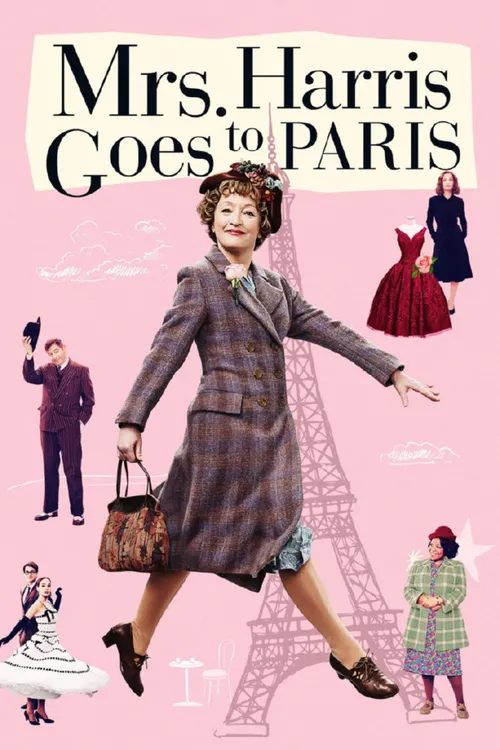
A widowed cleaning lady in 1950s London falls madly in love with a couture Dior dress, and decides that she must have one of her own.
Mrs. Harris Goes to Paris tells a humorously heartwarming tale about London housecleaner Ada Harris (Lesley Manville), who thinks her lonely life might turn around if she can become the owner of a Christian Dior gown.
Saying goodbye to friends like Archie (Jason Isaacs) won’t be easy, and neither will be winning over elite people in Paris from Madame Colbert (Isabelle Huppert) to idealistic accountant André (Lucas Bravo). But Ada’s irrepressible charm just might end up saving the whole House of Dior in this uplifting story of how an ordinary woman becomes an extraordinary inspiration by daring to follow her dreams.
Oops! Is this show WOKE?
Only an account holder or member can file. Cite a scene, a line, or a pattern. Other account holders +1 or −1 that argument, once each. The show is not IS WOKE until enough of them have given a +1. Enough −1s remove the write-up, and it is no longer shown.
Sign in to file a woke label. One of each criterion per member.
Comments and reviews
Report a mistake
Same rule as woke labels: one report, a written reason, and the community +1 or −1 it — once per member. A net +5 applies the change. Editors can hold it for review, or apply it immediately.
No mistake reports yet.
Sign in to report a mistake. One report per field, per member.
Member review
Lila Marsh
Sep 24, 2026
7/10I put on Mrs. Harris Goes to Paris the other night mostly because I needed something gentle after a long week, and I walked away feeling like I’d had a perfectly pleasant cup of tea that never quite got hot enough. Lesley Manville is the whole reason it works at all. She plays Ada Harris with this quiet stubborn spark that never tips into mawkishness, and you believe every step of her wanting that Dior dress the way some people want a second chance. It’s 1950s London, she’s cleaning other people’s houses, and one look at that gown sets her off on a trip to Paris that feels both ridiculous and completely understandable. I liked that the movie never mocked her for it. The Paris side has its charms. Isabelle Huppert as Madame Colbert gives you that cool French authority without turning into a cartoon villain, and Lucas Bravo’s accountant has a softness that fits the tone. The house of Dior itself looks expensive in the right way—the clothes, the workrooms, the whole atmosphere of people who take beauty seriously. There are a few sequences where Ada just stands in front of the dresses and you can see her recalibrating her entire idea of what life could still hold. Those moments landed for me. Jason Isaacs as Archie is solid too; their scenes together have an easy warmth that doesn’t need speeches. Where it loses me a bit is the evenness. Once Ada gets to Paris the story settles into a familiar shape: obstacles appear, charm dissolves them, hearts soften, lessons are learned. It’s all very tidy. I never felt real stakes, even when the dress or the money or the snobbery was on the line. Everything resolves with a kind of polite inevitability that left me smiling but not especially moved. The supporting characters are sketched just enough to serve the plot and then fade. I wanted a little more mess, a little more sense that this woman might actually fail or change in ways that cost her something permanent. Instead it stays buoyant the whole way through, which is fine if you want comfort, but it keeps the whole thing from sticking deeper. Manville carries so much of the emotional weight that when the script leans on coincidence or sudden generosity from the French elite, you notice the strain. The movie wants you to believe that one ordinary person’s sheer decency can shift an entire fashion house, and while that’s a lovely idea, it never quite earns the scale it reaches for. There are sweet side threads—friendships back home, a bit of quiet loneliness—that feel truer than the big Parisian turnaround. I kept wishing the film had stayed closer to Ada’s daily life a little longer instead of rushing toward the fairy-tale machinery. Visually it’s pretty without being showy. The dresses are the obvious draw, and they look like they belong in that world, not like museum pieces. The London sections have a lived-in grayness that contrasts nicely with the color once she crosses the Channel. Direction is steady, never flashy, which suits the material. I didn’t catch any heavy-handed modern messaging trying to reinvent the period; it just tells its small story and lets the charm do the work. That restraint is part of why I didn’t bounce off it harder. Still, charm only goes so far. By the final stretch I felt like I’d been gently guided through a story I already knew the shape of, and the emotional peaks stayed at a polite mid-level. Manville’s performance deserved a script that risked more awkwardness or disappointment. The movie is kind, and kindness is rare enough that I’m glad it exists, but kindness without sharper edges starts to feel like wallpaper after a while. I finished it feeling warmed and slightly underfed at the same time. Would I recommend it? For a quiet evening when you want something that won’t raise your blood pressure, yes. It’s the sort of film you can put on and not regret, then forget most of the details a week later except for Manville’s face when she first sees that dress. That look is worth the price of admission. Everything around it is pleasant scaffolding. I landed at 3.5 because the central performance and the simple sincerity of wanting something beautiful kept me watching, even when the rest of the machinery felt too well-oiled. It’s a nice movie that never quite becomes a necessary one. I’ll probably think of Ada Harris fondly the next time I see a really well-made coat in a shop window, and that counts for something. Just not quite enough to push it higher.