



 MOVIE · 2001
Ocean's Eleven (2001)
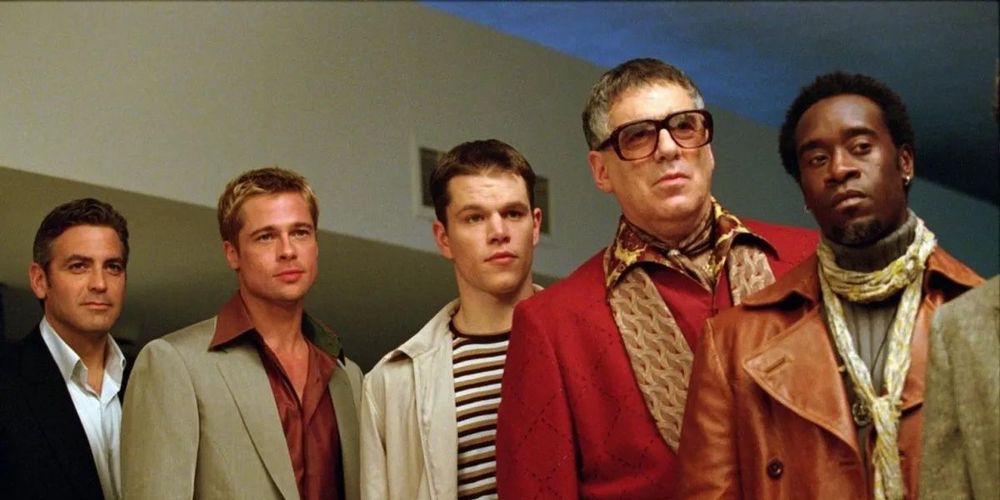
Danny Ocean likes his chances. All he asks is that his handpicked squad of 10 grifters and cons play the game like they have nothing to lose. If all goes right, the payoff will be a fat $150 million. Divided by 11. You do the math.
Oops! Is this show WOKE?
Only an account holder or member can file. Cite a scene, a line, or a pattern. Other account holders +1 or −1 that argument, once each. The show is not IS WOKE until enough of them have given a +1. Enough −1s remove the write-up, and it is no longer shown.
Sign in to file a woke label. One of each criterion per member.
Comments and reviews
Report a mistake
Same rule as woke labels: one report, a written reason, and the community +1 or −1 it — once per member. A net +5 applies the change. Editors can hold it for review, or apply it immediately.
No mistake reports yet.
Sign in to report a mistake. One report per field, per member.
Member review
Lila Marsh Member
Oct 16, 2026
★★★★★★★★★★I rewatched Ocean’s Eleven last weekend because the week had been long and I wanted something that knew exactly what it was doing. Not a puzzle I had to solve, not a statement, just a smooth ride with people who are good at their jobs and clearly enjoying the work. Danny Ocean walks out of prison already thinking three steps ahead, and the only real ask he makes is that the ten people he rounds up treat the whole thing like they’ve got nothing left to lose. One hundred fifty million on the table. Split eleven ways. The math is simple and the movie never pretends it’s deeper than that.
What still works for me is how little it wastes time proving anyone’s cool. George Clooney doesn’t have to sell Danny; he just is him. Brad Pitt shows up eating and already half-bored, which somehow makes him more interesting. The rest of the crew—Matt Damon, Don Cheadle, Bernie Mac, Carl Reiner, Elliott Gould, Casey Affleck, Scott Caan, Eddie Jemison, Shaobo Qin—each get just enough screen time to feel like real pieces of a machine instead of cameos. Nobody is carrying a speech about why they belong. They belong because they can open a door, run a con, or keep a cool head when the plan starts to wobble. That feels rare now.
I like the rhythm of the thing. Steven Soderbergh keeps the camera and the editing light on their feet. The Vegas casinos look expensive without the movie stopping to admire them. The heist itself is elaborate, but you can follow the logic if you’re paying attention. It never turns into a lecture on how clever the writers are. There’s a kind of confidence in that. The jokes land because the characters are listening to each other, not waiting for their punch line. Julia Roberts as Tess is written as someone with her own reasons and her own pride; she isn’t there just to be won or to make Danny look soft. The romantic thread is small and clean and doesn’t slow the rest down.
I keep coming back to how little moralizing there is. These guys are thieves. The movie knows it and doesn’t apologize or try to make them secret heroes of the working class. They’re professionals who happen to be ripping off a very rich man who also happens to be a jerk. That’s enough. No one stops to explain why the system is broken or why this particular score is justified. The pleasure is in the execution and the company. When the plan hits a snag, the tension comes from whether the crew can adjust, not from some sudden crisis of conscience. I find that refreshing. A lot of newer movies feel like they have to justify the fun before they’re allowed to have it. This one just has it.
The soundtrack and the clothes do a quiet amount of work. Nothing feels dated in a way that pulls you out; it just feels like 2001 Vegas at night, a little smoky and a little glamorous. The banter between Danny and Rusty still makes me smile. It’s the sound of two people who have known each other long enough to skip the setup. Carl Reiner’s Saul is pure delight—an older con man who still has the craft and the vanity. Bernie’s lines cut clean. Even the smaller beats, like the Chinese acrobat or the surveillance guy, feel specific instead of generic.
I’ve seen people try to overthink this movie, treat it like a deep commentary on capitalism or masculinity or whatever. I don’t buy it. It’s a heist picture that understands timing, casting, and the pleasure of watching competent people work. That’s its whole job and it does the job well. I don’t need it to be more. When I want something that lectures me I’ll pick something else. When I want to watch a crew pull off something stylish and improbable without the film breaking its own neck, this is still one of the easier choices.
It isn’t perfect. A couple of the side characters could have used one extra scene so they stick harder. The final twists are fun the first time and a little more telegraphed on later watches, though they still play. The tone stays so even that you never quite feel real danger, which some people want more of. I don’t mind. The movie told me what it was going to be in the first ten minutes and then delivered exactly that. Consistency is underrated.
I gave it four stars because it still does what it set out to do, twenty-plus years later, without apology or update. It’s lean, it’s funny in the right places, and it trusts the audience to enjoy the ride without being told how to feel about every choice. Danny likes his chances. So do I. I’ll put it on again the next time I need something that just works and doesn’t ask me to clap for its politics. That’s rarer than it should be, and I’m happy this one still holds the line.