
 TV
 VIDEO GAMES
 PODCASTS
 VIDCASTS
 STAND-UP
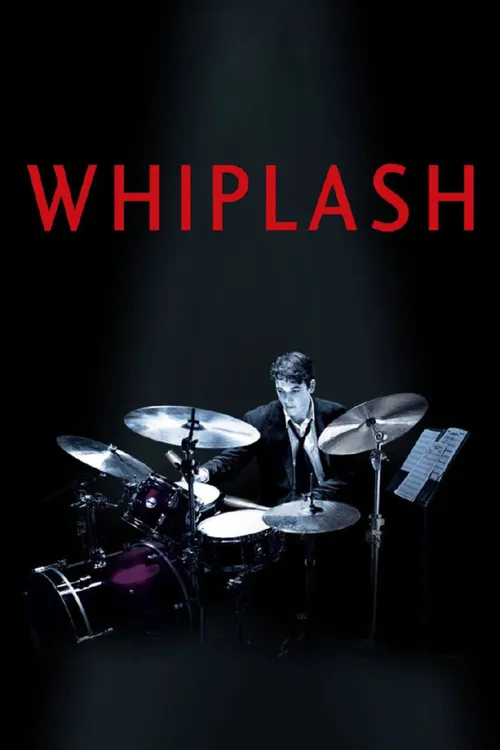



 MOVIE · 2014
Whiplash
A promising young drummer enrolls at a cut-throat music conservatory where his dreams of greatness are mentored by an instructor who will stop at nothing to realize a student's potential.
Andrew Neiman is an ambitious young jazz drummer, single-minded in his pursuit to rise to the top of his elite east coast music conservatory.
Terence Fletcher, an instructor known equally for his teaching talents and his terrifying methods, discovers Andrew and transfers him into his band. Andrew’s passion to achieve perfection soon spirals into obsession, as his ruthless teacher continues to push him to the brink of both his ability and his sanity.
Oops! Is this show WOKE?
Only an account holder or member can file. Cite a scene, a line, or a pattern. Other account holders +1 or −1 that argument, once each. The show is not IS WOKE until enough of them have given a +1. Enough −1s remove the write-up, and it is no longer shown.
Sign in to file a woke label. One of each criterion per member.
Comments and reviews
Report a mistake
Same rule as woke labels: one report, a written reason, and the community +1 or −1 it — once per member. A net +5 applies the change. Editors can hold it for review, or apply it immediately.
No mistake reports yet.
Sign in to report a mistake. One report per field, per member.
Member review
Omar Quill
Oct 17, 2026
9/10Whiplash hit me harder than most movies about someone grinding for something do. I’m not a jazz kid, but I put serious hours into games and builds, the kind where you restart a boss twenty times because almost isn’t good enough, and this felt like that same obsession turned all the way up. Andrew wants to be great the way some people want a clean clear of a raid or a perfect run—no half measures, no “good enough.” Fletcher is the guy who treats “good job” like an insult, and once you hear that line you start noticing how often people settle for soft praise instead of actual results. I watched it with my dad. He doesn’t play anything and mostly just saw a mean teacher yelling at a kid. I felt the opposite. Music really is that serious when you’re inside it. The bleeding fingers, the missed cues that feel like the floor dropped out, the way one wrong tempo wrecks everything—you either get that drive or you don’t. Andrew’s dad is the failed-writer type who means well and still can’t understand why his son would torch his own hands for a chair in a band. That gap felt real. I’ve had versions of that talk about staying up too late for one more attempt at something that doesn’t pay rent yet. J.K. Simmons is terrifying in the best way. You keep waiting for the soft moment that proves he’s secretly nurturing, and then he does something worse. Miles Teller sells the hunger without making Andrew look noble. He’s kind of a jerk sometimes, ditches people, and still you root for the next take because the movie locks you into his tunnel vision. The editing and the sound do half the work—the sticks, the chairs scraping, the sudden quiet after a blowup. It plays more like a fight movie than a music biopic. You’re tense the whole time, waiting for the next crash. Some people call it overrated because it got a lot of praise. Same old story. Sometimes the pushback is fair; this time it just proves they’re mostly wrong. It’s not trying to be a gentle lesson about balance. It’s about what it costs when perfection is the only score that matters, and whether that cost is worth it. The Charlie Parker story Fletcher tells isn’t there for vibes—it’s the whole thesis. Mediocre is safe. Greatness is ugly. I don’t fully buy that you need a monster to get there, and the movie leaves that open on purpose. Is Fletcher a genius mentor or just an abuser who got lucky with talent? The ending doesn’t hand you a clean answer, and I loved that. One last stand, everything on the line, no speech about friendship or healing. Just the work. I’ve seen people dunk on it for being “unrealistic” or too cruel. Sure, if you need your art stories to end with everyone hugging and learning boundaries. I didn’t want that. The anxiety is the point. When Andrew keeps coming back after the worst nights, it reminded me of stubborn runs where you know the drop chance is garbage and you queue anyway. Not healthy. Still recognizable. The father stuff sits under it without turning into a big monologue. Andrew is chasing something his dad never locked onto, and that quiet pressure is almost worse than Fletcher’s screaming. The repertoire choices and the way the band scenes are shot make the music feel physical. You don’t need to know jazz theory. You feel the tempo changes and the panic when the chair is on the line. Simmons earned every award talk for this; the vulnerability flashes are short and they make the cruelty sharper because you can’t write him off as a cartoon. Teller matches him beat for beat. Decent script, sharp directing, no wasted fat. It’s one of my favorite movies from that stretch of the 2010s for exactly those reasons. Not because it’s cozy. Because it refuses to sand the edges off ambition. Put decent speakers on and it hits different—the drums sit in your chest. I walked away thinking about how many times I’ve told myself “one more hour” on something that only matters to me, and how thin the line is between commitment and wrecking yourself. Whiplash doesn’t lecture. It just puts you in the room and lets the sticks do the talking. 4.5 is right where it lands for me: nearly perfect at what it sets out to do, a little extreme in places, and still the kind of thing I rewatch when I need a reminder that half-measures feel worse than failure.