
 TV
 VIDEO GAMES
 PODCASTS
 VIDCASTS
 STAND-UP



 MOVIE · 2026
Fjord
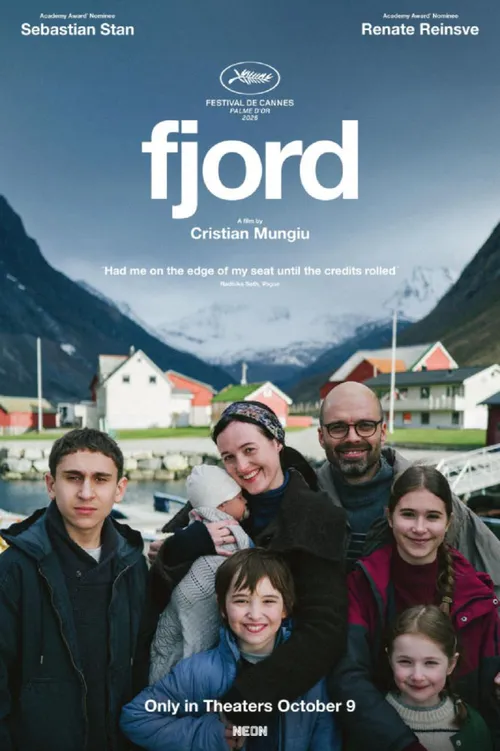
In a remote coastal community cut by steep glacial water, a man of faith and a returning outsider confront a disappearance that forces buried guilt and doctrine into the open. Suspicion, confession, and the landscape itself tighten until the truth cannot stay submerged.
Fjord follows Erik Halvorsen, a reserved counselor tied to the local parish who is called in when a young parishioner vanishes after a storm along the inlet. He works the shoreline paths and ferry landings, interviewing neighbors who trade in half-truths about the missing person’s last arguments over family duty and belief. Renate’s character, Ingrid Solberg, arrives from the city claiming a personal stake in the case and pushes Erik to reopen old files the church preferred closed. Their search turns up a locked boathouse, a damaged prayer book, and conflicting accounts of a late-night meeting on the cliffs. Each lead pulls Erik further from the safe routines of sermons and counseling sessions into choices that risk his standing in the congregation. Concrete pressure mounts as weather closes the roads and the water keeps yielding only fragments.
Ingrid presses for a secular inquiry while Erik insists the community’s silence is shaped by shame as much as weather. Together they track a former deacon whose private journals describe a crisis of doctrine and a plan to leave by boat. A confrontation in the chapel after hours forces Erik to admit how much he already knew and failed to act on. Ingrid’s own connection to the missing person surfaces in a hospital waiting room and reframes the motive from simple flight to deliberate exposure of hidden abuse of trust. The final stretch moves from the cliff path to a night crossing on the fjord, where confession and evidence arrive together and the parish must decide what it will protect. Erik and Ingrid leave the inlet changed, the case closed on paper but not in the lives that remain.
Click any of the following icons below to rent or stream it!
Oops! Is this show WOKE?
Only an account holder or member can file. Cite a scene, a line, or a pattern. Other account holders +1 or −1 that argument, once each. The show is not IS WOKE until enough of them have given a +1. Enough −1s remove the write-up, and it is no longer shown.
Sign in to file a woke label. One of each criterion per member.
Comments and reviews
Report a mistake
Same rule as woke labels: one report, a written reason, and the community +1 or −1 it — once per member. A net +5 applies the change. Editors can hold it for review, or apply it immediately.
No mistake reports yet.
Sign in to report a mistake. One report per field, per member.
Member review
Lila Marsh
Oct 21, 2026
8/10I caught Fjord on a weeknight when the theater wasn’t packed, just enough people that you could feel when the room went quiet together. Trailers ran long, somebody two rows up kept checking their phone until the lights went down for good, and then the screen took over in that way only a big room allows. You sit there and the sound design does half the work before anyone even speaks. That mattered more than I expected for a religious thriller that keeps its cards this close. What stayed with me wasn’t a checklist of twists. The film doesn’t hand you a tidy map. It sits in the space where faith, family, and outside pressure start grinding against each other, and it trusts the audience to feel the weight without a narrator explaining the stakes every five minutes. On a large screen the interiors feel cold and close at the same time; you notice the silence between lines more than the lines themselves. I kept thinking about how easily genuine worry for a child’s safety can tip into something else—an investigation that stops listening to the people who actually live the life being judged. Cultural and religious habits aren’t set dressing here. They’re the air the characters breathe, and the movie doesn’t treat that as a problem to be corrected by a clipboard and a policy memo. There’s a stretch in the middle where the tension stops being about what might have happened and starts being about who gets to decide what “protection” looks like. I found myself asking the same questions the film seems to be circling: at what point does concern for kids become a kind of hunt that runs on fragments and fear? How much power should agencies have to step into a home when the family’s whole way of living—prayer, discipline, the stories they tell their children—doesn’t match the script preferred by the people with badges and forms? And how much weight do we put on a child’s words when those words arrive already shaped by interviews, leading questions, or the simple desire to please the adult in the room? The movie doesn’t sermonize an answer. It just lets the unease sit there, which is rarer than it should be. I liked that it refused the easy costume. Faith isn’t played as the automatic mark of the closed-minded parent or the secret villain waiting to be unmasked. Ordinary belief gets screen time without a wink or a lecture. That choice alone kept me in the seat when a lesser version of this story would have started scoring points. You can feel the filmmakers were more interested in the cost of certainty—on every side—than in picking a team and handing out medals. The audience around me got quiet in the right places. No one laughed at the wrong moment. When people started filing out afterward, the talk in the lobby was low and a little unsettled, which felt honest. Technically it’s confident without showing off. The camera holds longer than most thrillers allow, and the score knows when to drop out completely. A couple of sequences on the big screen land harder because of scale; a smaller image would have sanded off the edges. I won’t pretend every beat is perfect. There’s a late turn that felt a shade too neat given how carefully the rest of the film had avoided neatness, and one supporting performance leans harder on mannerism than I needed. Still, those are small dents. The core holds. What I carried out into the parking lot was the sense that the film is willing to live inside a real argument instead of flattening it. Parents aren’t automatically monsters or saints. Children aren’t automatically pure truth-tellers or puppets. Institutions that claim to protect can also overreach, especially when they treat religious or philosophical difference as evidence rather than context. That last part matters. Too many stories in this lane decide the “correct” worldview in the first act and spend the rest of the runtime punishing anyone who doesn’t match it. Fjord doesn’t do that. It leaves you with the discomfort of not knowing exactly where the line should be drawn, only that drawing it carelessly ruins people. I gave it four stars because it earns the tension and respects the intelligence of the room. It isn’t flawless, and it isn’t trying to be a manifesto. It’s a serious piece of work that uses the thriller shape to ask harder questions than most movies bother with once the lights go down. If you go, go ready to sit with the silence afterward. That’s where this one actually lives.