
 TV
 VIDEO GAMES
 PODCASTS
 VIDCASTS
 STAND-UP
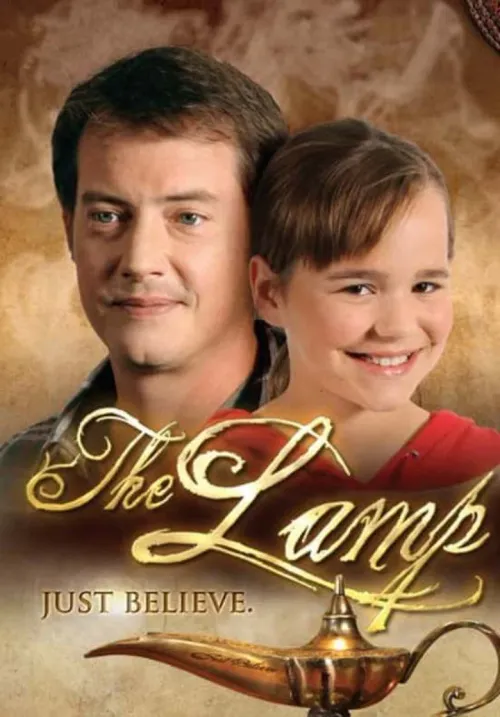



 MOVIE · 2010
The Lamp
A couple's marriage has fallen apart after the death of their son, until a mysterious stranger presents them with a magical lamp and three wishes to put things right. However, they must choose very carefully what they ask for.
The Lamp follows Stanley Walters, a successful novelist who retreats into isolation and bitterness after his young son, Eddy, is tragically killed. Two years after the accident, Stanley’s profound grief has paralyzed his writing career, left his bills unpaid, and pushed his long-suffering wife, Lisa, to the absolute brink of divorce. Their fractured marriage seems beyond repair until Lisa acquires an unusual, ancient oil lamp from a neighbor’s yard sale.
The arrival of the lamp brings a well-dressed, mysterious stranger named Charles Montgomery III, who identifies himself as a messenger rather than a conventional genie. Charles offers Stanley and Lisa three wishes to help put their lives back together, operating under the sole condition that they “just believe”. Because the magical contract forbids them from bringing their son back to life, the couple is given 30 days to look inward and evaluate what truly matters. Through the wishing process, alongside interactions with a feisty foster child next door, Stanley and Lisa finally confront their deep-seated pain, allowing them to rediscover hope, mend their relationship, and choose a path toward emotional and spiritual healing.
Click any of the following icons below to rent or stream it!
Oops! Is this show WOKE?
Only an account holder or member can file. Cite a scene, a line, or a pattern. Other account holders +1 or −1 that argument, once each. The show is not IS WOKE until enough of them have given a +1. Enough −1s remove the write-up, and it is no longer shown.
Sign in to file a woke label. One of each criterion per member.
Comments and reviews
Report a mistake
Same rule as woke labels: one report, a written reason, and the community +1 or −1 it — once per member. A net +5 applies the change. Editors can hold it for review, or apply it immediately.
No mistake reports yet.
Sign in to report a mistake. One report per field, per member.
Member review
Peg Harlan
Oct 2, 2026
6/10I put on The Lamp the other night mostly because the description caught me off guard. A husband and wife stuck in the wreckage after their boy dies, then some stranger shows up with an old lamp and three wishes. That setup is simple enough that it either turns into something honest or it collapses into wish-fulfillment syrup. For me it landed somewhere in the middle, which is why three stars feels right. Stanley and Deborah are living in the same house but not really living together anymore. You feel the cold right away. Not big arguments so much as the quiet that settles in when people stop knowing how to talk to each other about the one thing that matters. I have seen marriages go that route after a hard loss, and the movie gets the texture of it without needing a speech every five minutes. The lamp arrives, Stanley is skeptical, Deborah is more ready to reach for anything that might help, and the wishes start small. That part worked for me. They do not immediately ask for the moon. They try to fix pieces of the life they still have, and each change shows how little they have actually said to one another since the funeral. What kept me watching was the way the story forces them to slow down and name what they want. Grief makes people greedy for the wrong things sometimes, or too careful, or both at once. The lamp’s rules are tight enough that you cannot just wave it around. You have to mean it. I liked that restraint more than I expected to. It is not a flashy movie. The house feels lived-in and a little tired. The stranger stays mysterious without turning into a cartoon. There is a plainness to the whole thing that reminded me of the kind of quiet dramas they used to make when the point was the people in the room, not the machinery around them. Still, it never quite broke through for me. Some of the dialogue sits a little heavy, like the writers knew the lesson they wanted to land and kept steering toward it. When a film is about repairing a marriage after a child’s death, you want the repair to feel earned in the smallest gestures, not announced. A few scenes tip into that territory. You can sense the message coming around the corner before the characters do. That undercuts the better moments, the ones where Stanley just looks at Deborah and you can tell he is remembering how they used to be without anyone having to say it out loud. Those quieter beats are the real strength here, and there are not quite enough of them to carry the whole running time. I also wished the movie trusted the audience a little more with the ambiguity of the wishes themselves. Magic that fixes everything is boring. Magic that changes the surface while the inside stays broken is interesting. The Lamp flirts with that idea and then softens it. By the time the later wishes come into play, the emotional math feels a bit too neat. Life after that kind of loss is messier than the film finally allows. I do not need every story to end in total despair, but I do need the hope to cost something that feels real on screen. Here the cost is present early and then eases up when it should stay hard. Performances are solid without being showy. You believe these two people once had a life together and that it cracked. You believe they still love each other underneath the silence, even when they cannot stand to be in the same room. That is harder to play than it looks. The supporting pieces stay out of the way for the most part, which helps. Nobody is trying to steal scenes. The focus stays on the couple and the strange gift that forces them to decide what they actually value. I am not someone who needs every movie to punch me in the chest. Sometimes a steady, sincere try is enough. The Lamp is that kind of picture. It knows what it wants to say about grief, blame, and the long work of putting a marriage back together. It just does not always find the cleanest way to say it. There are stretches where the pace drags and the theme starts repeating itself. There are also stretches where it feels like someone remembered that real people do not heal on a schedule, and those are the parts I will remember. Would I recommend it? To the right person, yes. If you have ever sat across a kitchen table from someone you love and realized you have run out of words, there is something here worth sitting with. If you want tight plotting or big emotional fireworks, you will probably check out early. I stayed to the end because I wanted to see whether they would finally tell each other the truth without the lamp doing all the heavy lifting. They get close. Close is sometimes the most honest place a story like this can land, and I respect that even when I wanted it to dig one layer deeper. Three stars is me saying it has a good heart and a few true notes, but it never fully becomes the movie it could have been. I am glad I watched it. I am not in a hurry to watch it again. That feels fair for what it is.