
 TV
 VIDEO GAMES
 PODCASTS
 VIDCASTS
 STAND-UP
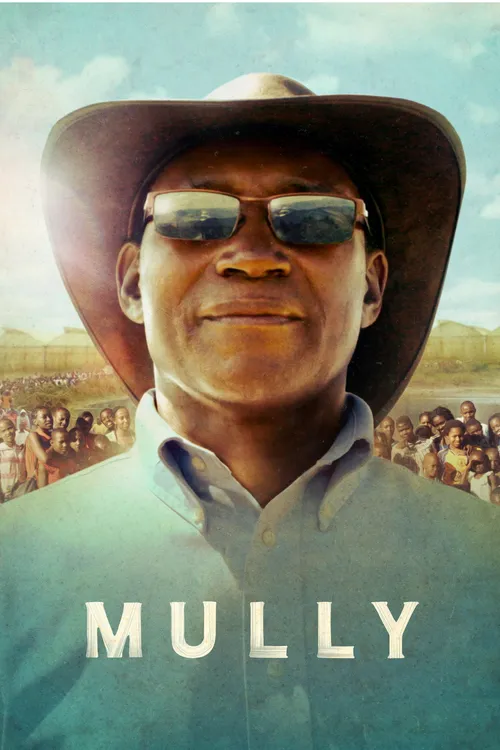



 MOVIE · 2017
Mully
Based on a true story, Charles Mully rises from abandoned street child to wealthy businessman—only to give it all up in search of deeper purpose.
Mully chronicles the extraordinary, rags-to-riches life story of Charles Mully, a Kenyan business tycoon who abandoned his enormous wealth to rescue his country's most vulnerable street children. The narrative begins with Mully’s deeply turbulent childhood, tracing his experience of being abandoned by his family at the age of six and spending nearly a decade begging for food on the streets. Through sheer determination, hard work, and a transformative spiritual awakening, he eventually defied the odds to build a multi-million-dollar empire spanning transportation, real estate, and oil. However, despite achieving stratospheric material success and raising a large family with his wife, Esther, Mully found himself deeply unfulfilled and haunted by the memories of his own impoverished youth.
The second half of the documentary captures a dramatic turning point when Mully answers a profound spiritual calling to sell all of his businesses and dedicate his remaining resources to serving Nairobi’s orphans. Despite facing intense skepticism and resistance from both his local community and his immediate family—who feared for their financial stability—he began bringing homeless children directly into his own house. Utilizing a powerful mix of interviews, archival footage, and dramatic reenactments, the film illustrates how this initial act of radical generosity blossomed into the Mully Children's Family, the largest children’s rescue and rehabilitation organization in Africa. Ultimately, Mully delivers an inspiring testament to faith, sacrifice, and the profound social impact that a single, determined individual can make.
Click any of the following icons below to rent or stream it!
Oops! Is this show WOKE?
Only an account holder or member can file. Cite a scene, a line, or a pattern. Other account holders +1 or −1 that argument, once each. The show is not IS WOKE until enough of them have given a +1. Enough −1s remove the write-up, and it is no longer shown.
Sign in to file a woke label. One of each criterion per member.
Comments and reviews
Report a mistake
Same rule as woke labels: one report, a written reason, and the community +1 or −1 it — once per member. A net +5 applies the change. Editors can hold it for review, or apply it immediately.
No mistake reports yet.
Sign in to report a mistake. One report per field, per member.
Member review
Toni Briggs
Oct 2, 2026
9/10Mully sat with me longer than I expected. Charles Mulli gets abandoned as a boy on the streets of Kenya, survives by sheer refusal to quit, claws his way into real businesses, builds a life with a wife and kids, then turns around and hands the fortune over so he can take in fatherless children by the hundreds and eventually the thousands. That path alone feels almost alien now. Most true-story films either drown you in the early misery or rush to the noble ending so everyone can feel virtuous. This one lets the grind stay visible the whole way. What lands hardest is how little apology the film makes for success. Mulli does not treat making money as some original stain he must scrub off. He builds companies, provides for his own family, and only later sells the businesses because the call to rescue street kids outgrew the ledger. The market gave him the means. Faith redirected them. That sequence matters. You watch a man use competence instead of guilt, and the difference shows in every practical detail that follows. Beds, food, schooling, order. The homes expand because he keeps solving the next concrete problem, not because someone hands him a slogan. His own household pays a real price at first. Space disappears. Routines collapse. The decision strains the marriage and the biological children. The film does not sand that away into pure inspiration-poster glow. You see the friction, then you see him keep going anyway because leaving kids on the same streets that nearly finished him is not an option he can live with. That kind of stubborn fathering feels rare on screen. Ordinary manhood here is treated as useful rather than suspect. He leads, corrects, stays, and builds a refuge that actually works. No one needs to shrink him so someone else can look strong. Faith drives the turning point without the film turning into a tract. The moment is personal and decisive, and Christianity functions as the engine rather than the costume for the bigot or the punchline. In a climate that often frames belief itself as the problem, watching it produce thousands of fed, housed, and educated children registers as almost radical. There is no identity checklist at the gate. No lectures assigning virtue by category. Just a guy who remembers being discarded and decides the answer is to father the discarded. The scale grows until Mully Children's Family is housing and raising kids across multiple sites, and the evidence is in the faces and the numbers more than in any swelling score. The documentary style stays straightforward. Reenactments fill gaps without overacting. Early street scenes hit because they refuse to linger for easy tears; they simply show abandonment as cold fact. Later sequences let the size of the work speak. A few stretches catalog the expansion a little too patiently, and some interview bits explain what the images already proved. A sharper cut would tighten the middle. Still, the core never softens into sentimentality. You finish knowing one man's refusal to look away altered thousands of lives in concrete ways. I keep coming back to how cleanly it rejects the usual script. Poverty is not romanticized or blamed on an abstract system so the audience can offload responsibility. Enterprise is not evil. Collectives are not holy by default. A competent man using the tools he earned to protect the vulnerable is allowed to remain competent. That should not feel refreshing, yet it does. Mully is not flashy cinema and it does not pretend to be. It is a clear-eyed account of someone who started with nothing, built something, then spent it on children who had less than nothing. The work continues. The kids keep arriving. The point holds without needing to dunk on anyone. I respect that more than most polished message movies I have sat through lately.