
 TV
 VIDEO GAMES
 PODCASTS
 VIDCASTS
 STAND-UP




 MOVIE · 2024
The American Society Of Magical Negroes IS WOKE
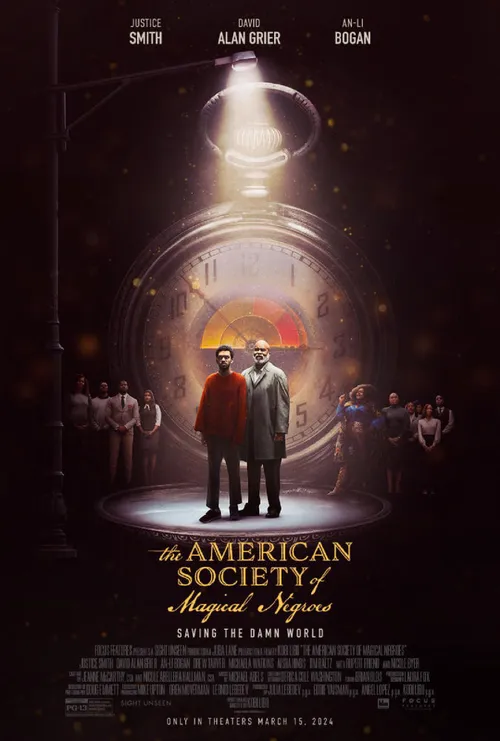
A young man, Aren, is recruited into a secret society of magical Black people who dedicate their lives to a cause of utmost importance: making white people’s lives easier.
Oops! Is this show WOKE?
Only an account holder or member can file. Cite a scene, a line, or a pattern. Other account holders +1 or −1 that argument, once each. The show is not IS WOKE until enough of them have given a +1. Enough −1s remove the write-up, and it is no longer shown.
Sign in to file a woke label. One of each criterion per member.
Comments and reviews
Report a mistake
Same rule as woke labels: one report, a written reason, and the community +1 or −1 it — once per member. A net +5 applies the change. Editors can hold it for review, or apply it immediately.
No mistake reports yet.
Sign in to report a mistake. One report per field, per member.
Member review
Becky Soto
Sep 20, 2026
4/10I gave this one a shot because the premise sounded like it might have some bite to it, but it ended up feeling thinner than I hoped. The central idea of a hidden group stepping in to smooth things over for others starts out with a bit of curiosity, yet the story never really builds much momentum from there. Scenes tend to circle the same point without adding much new tension or surprise, and after a while the whole thing starts to drag even though the runtime isn't especially long. One moment that stayed with me was a quieter exchange between the main recruit and one of the older members during what seemed like a routine assignment. It wasn't flashy, but it hinted at some internal doubt that could have been explored more. Instead the film keeps returning to the same basic setup, almost like it's afraid to move past the initial joke. That repetition made it hard to stay invested once the novelty wore off. The performances are mostly fine, especially from the supporting cast who get a few dry lines that land better than the broader stuff. Still, the leads feel a little hemmed in by the concept itself. You can sense they are trying to give their characters some depth, but the script keeps pulling focus back to the group dynamic and its rules. It leaves the personal stakes feeling secondary. I found myself checking the time more than once, which usually tells me the pacing isn't working. There are stretches where the dialogue tries to be clever but lands flat because the situation has already been explained a couple of times. A tighter edit might have helped, or maybe leaning harder into one character's perspective instead of spreading the attention so evenly. It is not a complete miss. There is an undercurrent of frustration with the whole arrangement that comes through in places, and that part feels genuine. But it never quite turns into something that feels lived in or particularly memorable beyond the basic hook. I left thinking the idea had more room than what ended up on screen. If the film had trusted its quieter beats a little more and cut back on the repeated explanations, it might have clicked better for me. As it stands, the satire stays mostly on the surface and does not dig into anything that would make the story stick after you finish watching. What keeps nagging at me is how the movie treats the people outside the group as almost interchangeable props. Once the recruit starts questioning the methods, you expect some real friction about who gets helped and why, but the script flattens those questions into the same shrug every time. A couple of side characters show up with real grievances, only to get waved off so the camera can cut back to another meeting room argument that covers ground we already covered twenty minutes earlier. The visual style does not help much either. Everything is lit the same flat way, which makes the supposedly secret locations feel like any other office comedy set. There is a brief stretch where the recruit is left alone overnight and the film almost finds a different rhythm—longer takes, less chatter—but then it snaps right back to the group banter as if that quieter mood was a mistake. I kept waiting for the consequences of their interventions to land harder, for someone to actually pay a price that stuck, yet the story keeps resetting the board so the next bit can play out cleanly. Even the humor starts to work against itself. The dry lines from the older members are the best part early on, but once you realize the film is going to recycle the same deadpan reaction three or four times, the air goes out of it. You can almost feel the writers checking boxes: establish the rules, show a messy case, have someone doubt the rules, reaffirm the rules. By the third cycle the pattern is so obvious that any surprise is gone. The leads do what they can with that structure, but you sense them hitting the same emotional marks because the script never gives them room to change in a lasting way. I walked out thinking about how much sharper this could have been if it had picked one relationship and stayed with it instead of constantly widening the lens to protect the high concept. The frustration that flickers through a few scenes feels real enough that it deserved more oxygen. Instead the movie keeps sanding those edges down so nothing too uncomfortable stays on screen for long. That choice leaves the whole thing feeling cautious and a little hollow, like it wanted credit for raising a pointed idea without ever risking the mess that would come from following through. A leaner version that trusted silence and actual fallout might have been something I remembered the next day. This one mostly faded on the drive home.