
 TV
 VIDEO GAMES
 PODCASTS
 VIDCASTS
 STAND-UP




 MOVIE · 2022
The Inspection IS WOKE
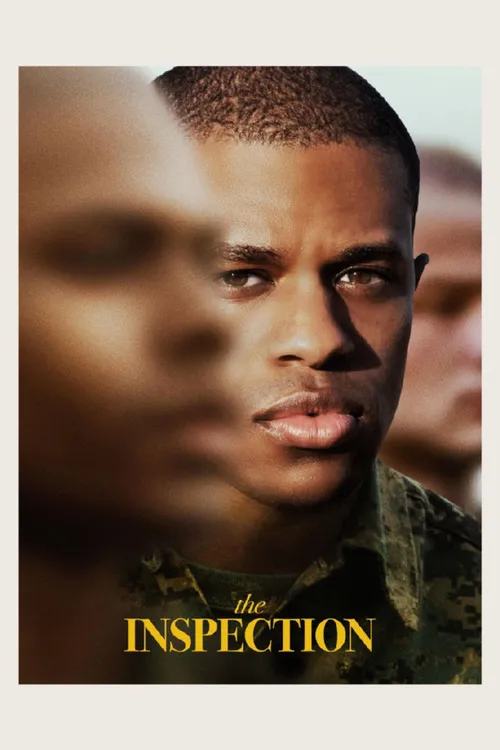
Ellis French is a young, gay Black man, rejected by his mother and with few options for his future, decides to join the Marines, doing whatever it takes to succeed in a system that would cast him aside.
But even as he battles deep-seated prejudice and the grueling routines of basic training, he finds unexpected camaraderie, strength, and support in this new community, giving him a hard-earned sense of belonging that will shape his identity and forever change his life.
Oops! Is this show WOKE?
Only an account holder or member can file. Cite a scene, a line, or a pattern. Other account holders +1 or −1 that argument, once each. The show is not IS WOKE until enough of them have given a +1. Enough −1s remove the write-up, and it is no longer shown.
Sign in to file a woke label. One of each criterion per member.
Comments and reviews
Report a mistake
Same rule as woke labels: one report, a written reason, and the community +1 or −1 it — once per member. A net +5 applies the change. Editors can hold it for review, or apply it immediately.
No mistake reports yet.
Sign in to report a mistake. One report per field, per member.
Member review
Stu Kline
Sep 19, 2026
7/10The Inspection puts you right into the situation of a guy who has run out of choices. French joins the Marines because his mother has cut him off and nothing else lines up. That starting point feels honest, and the film sticks with how that kind of pressure shapes every decision after he ships out. Boot camp itself comes across as grinding and small-minded in the way real training often is. The constant yelling, the inspections, the way every recruit gets broken down on the same schedule, all of that lands without needing extra gloss. You can feel how much of the day is just surviving the next evolution and keeping your head down. The part about hiding who he is adds a separate layer of calculation. French measures every word and movement around the other guys and the instructors. That secrecy creates its own exhaustion on top of the physical work, and the movie shows it without turning every scene into a speech about it. Some of the quieter moments with the few people he starts to trust work better than the louder confrontations. The performances keep things grounded. The lead carries the weight of someone who has already lost most of his options, and the supporting cast avoids turning the drill instructors into cartoons. They come off as people doing a job that rewards control and punishes softness, which fits the setting. Where it slips is when the personal story starts to crowd out the training itself. The film knows the military environment is harsh, but every so often it pauses to underline the identity angle instead of letting the daily routine make the point. Those beats feel inserted rather than earned, and they slow the momentum that the rest of the movie builds. The connections French makes with a couple of other recruits and one instructor stay believable because they stay tentative. Nobody becomes an instant ally. The trust has to be tested through shared misery, and the movie lets that process take time. That restraint helps more than the bigger emotional turns. Overall the picture holds together as a look at what it costs to force your way into an institution that was never built for you. It does not overstay its welcome, and it does not pretend the Corps suddenly changes its rules. The 3.5 rating comes from solid craft in the training sequences and the lead performance, minus the times the story leans on the obvious instead of the details that are already there. The physical toll is shown in small, repeated ways—blisters, short sleep, the way bodies start moving on command before the mind catches up—and those details do more work than any single monologue. You watch French learn the rhythms of the platoon the same way everyone else does, except he is also running a second, private calculation about what can be said out loud and what has to stay locked down. That double tracking never fully disappears, even in the stretches where the film is content to just watch the unit get worn down together. The camera stays close enough to catch the hesitation in a glance or the careful way he answers a question, but it does not linger like it is waiting for applause. When the story does open up space for him to breathe, it is usually through shared work rather than confession. A late-night conversation or a quiet assist during an inspection carries more weight because the movie has already established how little margin anyone has for error. The mother remains a distant pressure rather than a constant presence, which keeps the focus on the present rather than turning the film into a series of explanatory flashbacks. You understand why he is there without needing the past spelled out every ten minutes. The few times the film circles back to that rejection, it feels like another weight he is carrying instead of a thesis statement. That choice keeps the running time lean and the tone consistent with the rest of the experience. Technically the movie stays unfussy. The barracks and the drill field look lived-in and slightly washed out, matching the sense that nothing here is designed for comfort. Sound design does a lot of the heavy lifting—the overlapping cadence calls, the sudden silence when someone screws up, the constant low hum of bodies in motion. None of it calls attention to itself, which is exactly right for a story that is about enduring a system rather than conquering it. By the final stretch the film has earned its quieter observations about belonging and survival. French does not magically fix the institution or himself; he simply finds a way to keep moving inside it. That limited victory feels truer than a bigger transformation would have. The movie understands that getting through is sometimes the only available win, and it does not dress that fact up as triumph. The small connections he manages to hold onto matter because they are fragile and conditional, not because they rewrite the rules. In the end the film leaves you with the clear sense that the pressure never really lifts—it just changes shape—and that honesty is what stays with you after the credits.