
 TV
 VIDEO GAMES
 PODCASTS
 VIDCASTS
 STAND-UP
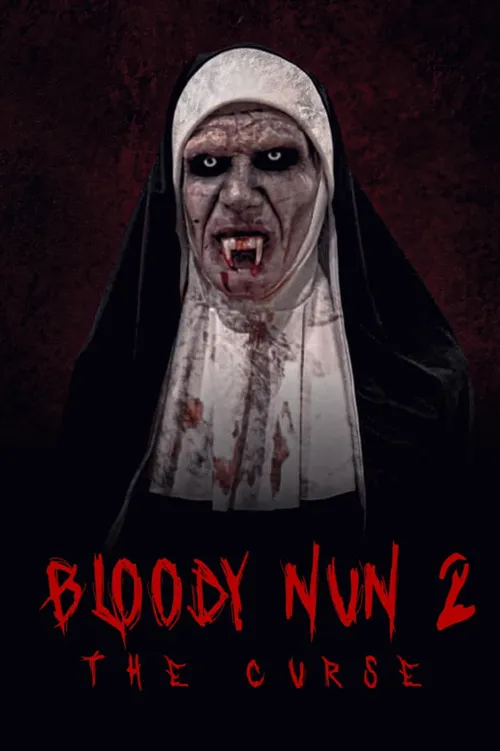




 MOVIE · 2023
The Nun 2 IS WOKE
In 1956 France, Sister Irene is drawn back into battle with the demon Valak after a priest’s brutal murder signals a spreading evil. The sequel tracks her return to confront the entity that once nearly destroyed her.
The Nun 2 follows Sister Irene, a young nun still marked by her earlier encounter with the demon Valak, as she is summoned to investigate a horrific killing in 1956 France. A priest has been murdered under unnatural circumstances, and reports of a spreading malevolence quickly point back to the same demonic presence she faced before. Irene travels into the French countryside, where fear has already taken root among the local clergy and residents. She must again rely on her faith and hard-won knowledge of Valak’s tactics while the entity begins to manifest in familiar and terrifying forms. Allies from her past reappear, and new faces at a nearby institution become entangled in the danger. Every step deeper into the case forces Irene to confront both the demon and the lingering trauma of their first clash.
As the investigation widens, Irene discovers that Valak’s influence is seeping into a girls’ school and the surrounding community, turning ordinary spaces into sites of dread. She works alongside returning companion Frenchie and others who risk their lives to contain the threat before more victims fall. The demon nun appears in visions and physical attacks, testing Irene’s resolve and the faith of everyone around her. Clues left at the murder scene and subsequent hauntings push the group toward a direct confrontation. Irene must decide how far she is willing to go to stop Valak from claiming further souls. The final stretch brings the characters face-to-face with the entity in a struggle that will decide whether the evil is driven back or allowed to spread further.
WHAT CRITERIA MAKES IT WOKE?



WOKE EVIDENCE:
 NOT WOKE SHOWS adminDistorted Racism
- Opening, 1956 France: a Black novice says her family fled because white people set their house on fire.
- Race grievance is dumped in the first five minutes of a period convent story that did not need it.
- NOT WOKE SHOWS adminRacist Expectations
- The script’s default is white man = worst: the notable white man later reads as the devil/demon incarnate.
- The Black nun’s backstory is the “of course the white people did it” beat — 1956 France as a racism fable.
- NOT WOKE SHOWS adminAnti-Religious Bias
- A convent of nuns is the horror set. The Church is the haunted house, not a source of good.
- Faith is window dressing for demons; the white priest/man-of-the-cloth lane is the evil one.
Oops! Is this show WOKE?
Only an account holder or member can file. Cite a scene, a line, or a pattern. Other account holders +1 or −1 that argument, once each. The show is not IS WOKE until enough of them have given a +1. Enough −1s remove the write-up, and it is no longer shown.
Sign in to file a woke label. One of each criterion per member.
Comments and reviews
Report a mistake
Same rule as woke labels: one report, a written reason, and the community +1 or −1 it — once per member. A net +5 applies the change. Editors can hold it for review, or apply it immediately.
No mistake reports yet.
Sign in to report a mistake. One report per field, per member.
Member review
Becky Soto
Oct 7, 2026
6/10I went into The Nun 2 already knowing it sits in that Conjuring corner of horror where the atmosphere does a lot of the heavy lifting and the scares are hit or miss. Sister Irene is back, Taissa Farmiga still carries the quiet strength that made her interesting the first time, and this round puts her in 1950s France after a priest is killed and something dark starts spreading past any single convent. I liked that the story moves her toward a Catholic boarding school with sealed rooms and students who feel the weight of whatever is loose there. Some of the practical work and the imagery actually land better than I expected. There are stretches where the camera holds still long enough for the unease to build instead of just yanking you with noise, and that felt like a step up from the earlier film which dragged for me. A couple of sequences stuck with me. One is Irene walking the quieter halls and sensing that the sealed space is not just history but an active problem. Another is the way the cloaked figure keeps reappearing in ways that feel more patient than the original’s constant pressure. When the movie trusts that slow dread, it works. Farmiga sells the faith-under-pressure without turning every line into a speech, and the school setting gives the threat a clearer group of people to endanger, which helps when the pattern of attacks starts widening. That said, I still came away feeling the whole thing is only partly there. It spends long stretches on pauses and dialogue that do not always earn their length, and the second half loses some of the early momentum. The jumpscares are still the same old toolkit, and more than a few fall flat. I also never fully locked onto what the larger plan of the demon was supposed to be beyond the usual spread-and-corrupt loop. Emotionally it stays pretty empty; you care about Irene because Farmiga makes you, not because the script digs deep. For a franchise that keeps promising bigger spiritual stakes, this one still feels like it is marking time more than closing a chapter with real force. It is better than the first Nun movie for me, mostly on craft and a clearer sense of place, but “better than a slog” is not the highest bar. What pulled me out of the period mood right away was how the opening handles a Black novice in 1956 France. Within the first few minutes she explains that her family fled because white people set their house on fire. It is a race-grievance drop that the convent story simply did not need. I noticed it immediately because the film is otherwise trying to settle you into a specific time and religious world, and suddenly it pauses to deliver that beat like a required stamp. Later the script’s habit becomes clearer: the notable white man reads as the devil or demon in human shape, while the Black nun’s backstory sits there as the automatic “of course the white people did it” explanation. 1956 France gets used as a little racism fable tucked inside a demon-nun picture, and it feels grafted on rather than organic to the horror. The setting itself doubles down on another choice I keep noticing in these films. A convent full of nuns is the haunted house. The Church is the place where evil lives and moves, not a source of real good that can stand against it. Faith ends up as window dressing while the white priest and man-of-the-cloth lane is the one coded as the evil presence. Demons get the energy; the religious life mostly gets the atmosphere of dread and the occasional ritual that may or may not hold. I like Irene as a character who still believes, but the movie around her treats the institution more as a gothic backdrop than as anything with moral weight of its own. I am not someone who needs every horror film to affirm my worldview. I just want the scares and the story to feel like they belong to the same movie. When the race note arrives that early and the white-man-as-worst pattern locks in, it breaks the spell of the 1950s French countryside and the school. The stronger craft choices—the practical effects, some of the suspense staging, Farmiga’s steady presence—cannot fully paper over how much time is spent on talky downtime and how little the spiritual side feels lived-in. If you are already in the Conjuring loop you will probably watch it the way I did, half invested and half checking the clock. I landed at a three because enough of the direction and the lead performance kept me from checking out, and because it does improve on the duller stretches of its predecessor. It just never becomes the tight, confident scare picture it keeps hinting it could be, and the early grievance beat plus the Church-as-haunted-house framing are part of why it stays stuck in the middle for me.