
 TV
 VIDEO GAMES
 PODCASTS
 VIDCASTS
 STAND-UP
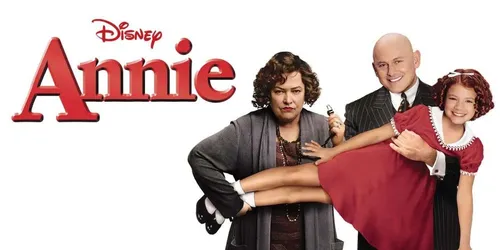



 MOVIE · 1999
Annie (1999)
In a mischievous, musical adventure, an adorable orphan named Annie escapes a run-down orphanage and the dastardly Miss Hannigan and her no-good brother. Annie charms the pants off of big-hearted billionaire Oliver Warbucks along with the President of the United States!
Oops! Is this show WOKE?
Only an account holder or member can file. Cite a scene, a line, or a pattern. Other account holders +1 or −1 that argument, once each. The show is not IS WOKE until enough of them have given a +1. Enough −1s remove the write-up, and it is no longer shown.
Sign in to file a woke label. One of each criterion per member.
Comments and reviews
Report a mistake
Same rule as woke labels: one report, a written reason, and the community +1 or −1 it — once per member. A net +5 applies the change. Editors can hold it for review, or apply it immediately.
No mistake reports yet.
Sign in to report a mistake. One report per field, per member.
Member review
Dan Reilly
Oct 16, 2026
8/10The 1999 Annie starts off a little too polished for its own good, and that rubbed me the wrong way at first. Everything feels staged like they’re still blocking for a theater audience even though the cameras are right there. The orphanage set is grimy on purpose but never quite dirty enough to convince you these kids have been scraping by for years. Miss Hannigan’s schemes land with the subtlety of a cartoon villain, and her brother Rooster comes off as pure comic-book sleaze without enough menace underneath. I kept waiting for the story to take a sharper turn or let the adults get properly dangerous, but it stays safely in family-musical territory the whole way. Some of the musical numbers stretch longer than they need to, and a couple of the ensemble bits feel like padding rather than momentum. The Depression-era backdrop is painted with broad strokes—rich guy, poor kids, happy ending—and if you’re looking for grit or surprise, you won’t find much of it here. That said, once the movie settles into its own rhythm it starts working on you. Alicia Morton as Annie has the kind of clear, unforced voice that makes the big songs land without sounding like she’s auditioning for something else. She sells the optimism without turning it into syrup. Kathy Bates as Hannigan is the real engine; she plays the drunken bitterness and the greedy desperation with just enough real edge that you almost root for her to get away with something before the inevitable collapse. Victor Garber’s Warbucks starts stiff—exactly how a billionaire who doesn’t know how to talk to children should start—and then loosens up in a way that feels earned rather than scheduled. The chemistry between the two of them carries several scenes that could have gone flat. The supporting orphans bounce around with actual kid energy instead of that overly rehearsed Broadway polish you sometimes get in these things, and the dog Sandy is used sparingly enough that he doesn’t become a gimmick. I liked how the movie keeps the core simple: a kid who wants a home, an adult who discovers he needs one, and a crooked caretaker who can’t stand either idea. It doesn’t try to modernize the message or load extra sermons onto the plot. The White House sequence is pure fantasy wish-fulfillment, complete with the President getting pulled into the song-and-dance, and somehow it doesn’t collapse under its own corn. You can feel the production wanting to deliver a good time more than it wants to lecture anyone. The costumes and the big set pieces have that late-90s television sheen—bright, clean, a little artificial—but they match the tone. This isn’t trying to be a gritty period piece; it’s a mischievous musical adventure and it knows it. What kept me at four stars instead of higher is the predictability and the occasional soft landing. Once you’ve seen one version of this story you can spot every turn coming, and the 1999 take doesn’t invent new ones. A few of the secondary characters exist mainly to fill out group numbers. The finale wraps everything up so neatly you almost want one loose end left dangling just for realism. Still, the central performances hold it together, the songs are delivered with real conviction rather than ironic distance, and the whole thing leaves you feeling lighter than when you started. It’s the kind of movie you put on when the house needs something cheerful that doesn’t insult your intelligence or talk down to the kids in the room. I went in skeptical of another glossy retread and came out glad I’d stuck with it. The heart is genuine even when the edges are rounded off, and that counts for more than I expected.