
 MOVIES
 TV
 VIDEO GAMES
 PODCASTS
 VIDCASTS
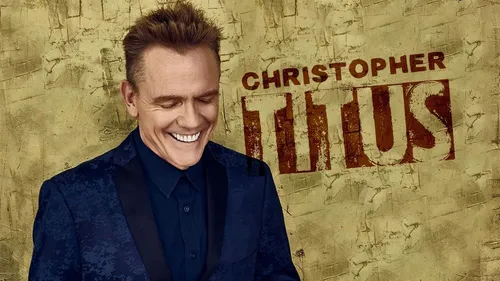



 STAND-UP · 2000
Christopher Titus
Christopher Titus delivers high-voltage confessional stand-up that turns a dysfunctional family history and personal catastrophes into relentless dark comedy. A typical set rides raw storytelling, rapid pivots, and self-lacerating punchlines until the room is spent from laughing.
Christopher Titus works a confessional, high-intensity persona built on surviving a famously dysfunctional family and turning every scar into material. He opens rooms with blunt personal stakes—parents, near-death medical disasters, and the mess of growing up—then accelerates through stacked punchlines and asides. Sets usually feel like a guided tour of his own wreckage: he names the damage, undercuts it with a hard laugh, and keeps the pace relentless so the audience never settles. Topics stay close to lived experience rather than abstract theory; the comedy comes from how specifically and unsentimentally he recounts it. Crowds show up for that mix of honesty and velocity, the sense that nothing in his life is off-limits if it can yield a sharper joke.
He keeps returning to family chaos, bodily misfortune, and generational friction, treating them as fuel instead of sermons. The jokes are aimed at people who want dark, adult stand-up that still feels like a story told by someone who lived it, not a checklist of causes. Rooms tend to run loud and exhausted—long stretches of laughter broken by the next sharper turn—because the delivery stays physical and unfiltered. He can touch charged subjects, yet the through-line remains his own biography and the comic engine of surviving it. What lingers is the persona: a comic who leaves no personal stone unturned and expects the audience to keep up.
Oops! Is this show WOKE?
Only an account holder or member can file. Cite a scene, a line, or a pattern. Other account holders +1 or −1 that argument, once each. The show is not IS WOKE until enough of them have given a +1. Enough −1s remove the write-up, and it is no longer shown.
Sign in to file a woke label. One of each criterion per member.
Comments and reviews
Report a mistake
Same rule as woke labels: one report, a written reason, and the community +1 or −1 it — once per member. A net +5 applies the change. Editors can hold it for review, or apply it immediately.
No mistake reports yet.
Sign in to report a mistake. One report per field, per member.
Member review
Dan Reilly
Oct 9, 2026
7/10I went through a handful of Christopher Titus clips from that early stretch and came out half-impressed, half worn down. The first problem is the voltage never really drops. He locks into the confessional gear immediately—dad, mom, the whole wrecked household—and stays there until the bits start to feel like one long charged monologue instead of separate jokes with room to breathe. You get the setup, the pivot, the self-hit, and then another setup right on top of it. After a while the rhythm becomes predictable even when the details are ugly and funny. I found myself waiting for a gear change that never quite arrived. Dark family material is his whole engine, which is fine, but when every scar gets the same high-speed treatment, the later punches land softer than the early ones. The persona itself is another sticking point for me. Titus presents as the guy who survived the disaster and now owns every bruise, and that works until it starts sounding like a brand. He names the damage out loud, undercuts it fast, and keeps moving so you don’t sit with anything too long. That relentlessness is the point, I get it, but it also keeps the audience from deciding how much is confession and how much is performance. A couple of the dad bits—Ken Titus stories especially—hit hard the first time and then feel recycled when he circles back with a slightly different angle. The “my dad wasn’t abusive, he was just...” framing is effective comedy, no question, but you can feel him sanding the edges for the laugh instead of letting the awkward silence do more work. Kids these days jokes and the old-school toughness comparisons float through too, and those land more as crowd-pleasers than as anything sharp. What does work is the specificity. He doesn’t float into abstract complaints. When he talks about the household chaos, the near-misses, the medical disasters, the way a parent’s logic could turn on a dime, you believe he lived it. The punchlines come from the concrete mess, not from a thesis about society. That keeps the set from turning into lecture. One clip about the parents not buying the wildest dreams had a clean, dry turn that actually surprised me—no big wind-up, just the blunt observation and the room reacting. Another stretch on carrying the family monsters forward felt tighter because he let a little air in before the next hit. Those moments prove he can modulate when he wants to. The problem is he doesn’t want to often enough. The default setting is full throttle, stacked asides, rapid pivots, and by the fourth or fifth clip in a row the technique starts to announce itself. I also noticed how much the live-room energy depends on him never letting the crowd settle. That’s a craft choice, and it works for people who want the ride. For me it got exhausting. Stand-up that lives on personal catastrophe needs a few quieter beats so the next dark turn actually stings. Titus rarely gives you that. He names the wreckage, undercuts it, and sprints to the next one. You laugh, you keep laughing, and then you walk away feeling like you got the same meal served faster each time. The “perfect life” irony bits and the gas-is-expensive style jabs at soft modern complaints fit the persona, but they’re not where he’s strongest. He’s strongest when the story is small and mean and specific—something that happened in a kitchen or a hospital waiting room—not when he’s summarizing an era or a generation. Still, credit where it’s due. The guy can hold a room with nothing but biography and timing. The confessional engine is real; the scars aren’t invented for the set. When he stays inside one story long enough for the details to accumulate, the laughs get meaner and better. The early material has that rawness before everything got polished into a reliable product. You can hear why people keep coming back for the family stuff: it’s ugly, it’s funny, and it doesn’t beg for sympathy. He would rather you laugh at the wreck than feel sorry for the driver. That attitude is honest and it ages better than a lot of softer confessional comedy. I just wish the sets left more space between the detonations. Relentless is a style, not a virtue by itself. After the clips I sat with a mixed feeling. Funny enough to keep watching the next one. Same enough that I didn’t need a seventh. The high-intensity personal stakes open rooms, no argument. The stacked punchlines and self-lacerating turns do what they’re built to do. But the lack of dynamic range keeps it at a solid, not great, level for me. Three-and-a-half feels right—worth the time, not something I’d chase down every new hour of. If he ever throttles back for a few minutes and lets a story breathe before the next pivot, the same material would hit harder. As it stands, it’s competent dark confessional work that knows its lane and rarely leaves it. I laughed, I got tired of the throttle, and I respected the honesty more than the structure. That’s the whole report.