
 MOVIES
 TV
 VIDEO GAMES
 PODCASTS
 VIDCASTS


 STAND-UP · 2012
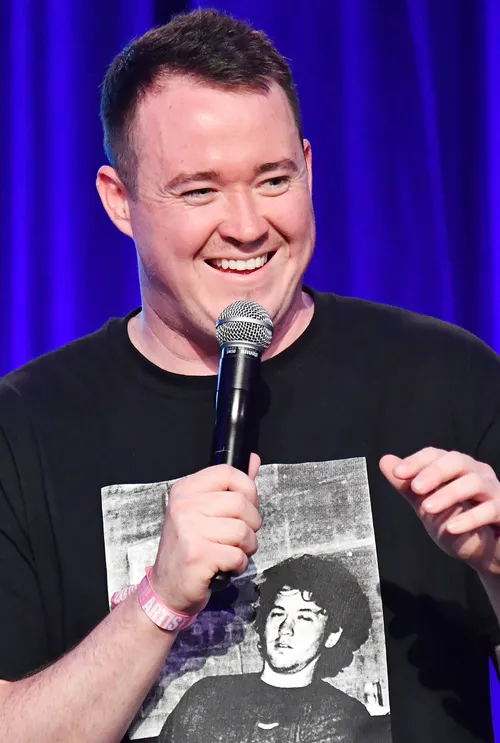
Shane Gillis
Shane Gillis delivers loose, deadpan stand-up built on barroom storytelling, sports-and-guys energy, and blunt observational bits that treat taboo topics as jokes rather than sermons. Crowds show up for the hangout cadence and unpolished persona more than polished punchline machines.
Shane Gillis works a low-key, almost conversational stage presence that feels closer to a long podcast rant than a tightly scripted hour. He leans on self-deprecation, sports talk, working-class observations, and impressions that land through timing and understatement instead of big theatrical swings. Sets typically wander through everyday absurdities, male friendship dynamics, and cultural friction without turning the room into a classroom. The pacing stays relaxed and hangout-oriented, letting bits breathe and circle back the way a bar conversation does. Audiences who like him usually want that unvarnished, slightly messy energy rather than sleek club polish. His material treats awkward or offensive subjects as fair game for comedy, not as opportunities for moral instruction.
He keeps returning to the texture of ordinary guy life—jobs, friends, sports, family friction—and the gap between how people talk in private and how they perform in public. The jokes are aimed at rooms that enjoy bluntness and shared recognition more than affirmation or identity checklists. Live, the atmosphere tends toward communal laughter at the expense of sacred cows rather than applause breaks for correct opinions. Nothing in the public record frames the act as a vehicle for DEI plots, character swaps, or climate-as-sin lectures; the draw is the persona and the permission to laugh at messy human stuff. Viewers looking for a comedian who sounds like the loudest guy at the end of the bar will recognize the style immediately.
Oops! Is this show WOKE?
Only an account holder or member can file. Cite a scene, a line, or a pattern. Other account holders +1 or −1 that argument, once each. The show is not IS WOKE until enough of them have given a +1. Enough −1s remove the write-up, and it is no longer shown.
Sign in to file a woke label. One of each criterion per member.
Comments and reviews
Report a mistake
Same rule as woke labels: one report, a written reason, and the community +1 or −1 it — once per member. A net +5 applies the change. Editors can hold it for review, or apply it immediately.
No mistake reports yet.
Sign in to report a mistake. One report per field, per member.
Member review
Peg Harlan
Oct 9, 2026
9/10I spent the better part of an evening going through clip after clip of Shane Gillis, jumping between older bits and the stuff that floats around now, and it left me with that rare feeling you get when a comic just sounds like a guy talking instead of a guy performing. The posture is half the joke. He holds the mic like it is something he picked up off a bar and might put back down any second. No big swings, no slick handoffs between premises. Bits wander the way a real conversation does, circling sports and dumb haircuts and the weird little codes guys still use with each other, then landing somewhere blunt without ever turning the landing into a lecture. What works is the hangout cadence. He is not racing to the next punchline machine. He lets a story breathe, drops an impression that barely moves his face, and trusts the room—or in my case the screen—to catch up. You get the barroom energy without the fake “I’m just a regular dude” costume a lot of people try on. It feels closer to a long podcast rant that somehow got put onstage and still works. Self-deprecation does a lot of the heavy lifting. He makes himself the punchline more often than the world around him, which keeps the blunt observational stuff from tipping into sermon territory. Taboo topics get treated like jokes because that is what they are to him in the moment, not because he is daring you to be offended. I kept noticing how little he relies on theatrical packaging. Transitions are almost nonexistent. One second he is on modern movies or country music or some family dynamic that should not be funny, the next he has drifted into male friendship nonsense or sports talk that only lands if you have spent time around that particular flavor of guy energy. The pacing stays relaxed on purpose. It is the opposite of the tightly scripted hour where every beat is polished until it squeaks. Crowds show up for that unpolished persona, and watching the clips one after another you can feel why. The jokes do not feel written so much as remembered and slightly improved on the walk to the stage. There is a Danny McBride quality to the whole thing if you have ever watched that guy play a certain kind of loud, slightly broken American man without apology. Gillis does it in stand-up form: same willingness to look ridiculous, same refusal to sand the edges off for anybody. He will go after the small absurdities of everyday life and the bigger cultural friction without turning the set into a classroom. I watched a stretch where he just kept stacking ordinary observations—haircuts, dogs, the way people talk about sports figures—and none of it needed a moral. The laughter comes from recognition more than surprise. You have either known that guy or been that guy, and he is not asking you to feel bad about it. The early material already had the bones of what he does now. Loose, deadpan, built on storytelling that sounds like it started at last call and somehow made it to a stage. He does not oversell the impressions. Timing and understatement do the work. When he hits a sports bit or a working-class observation, it lands because he sounds like he actually cares about the game or the job, not because he is mining it for some larger point. That is rarer than it should be. A lot of comics these days either chase the polished Netflix sheen or lean so hard into the podcast hang that they forget they are supposed to be funny. Gillis sits in the middle and somehow makes both sides look overcooked. I am not going to pretend every single clip is gold. Some bits wander longer than they need to, and the barroom rhythm can occasionally feel like he is still finding the exit. But even the weaker stretches have that same conversational ease, so you never feel like you are waiting for the real show to start. He just keeps talking the way he talks, and eventually another clean observation or deadpan turn shows up. Watching several in a row makes the pattern clear: the persona is the product. People want the hang more than they want a perfect punchline factory, and he delivers that without turning it into a brand exercise. By the time I shut it down I was thinking about how few comics still sound like they could step offstage and keep the same conversation going at the bar. They used to make more of them like this—guys who treated the stage like an extension of ordinary talk instead of a separate performance zone. Gillis still does. The sports-and-guys energy never feels like cosplay. The blunt bits never feel like he is testing the temperature of the room for permission. He just says the thing, lets it sit, and moves on. That is harder to pull off than it looks, and it is why the clips keep working even when you are not in the room with the live crowd. You still get the sense of being let in on the hang rather than sold a ticket to a show. Four and a half feels right. It is fun, it is sharp without being precious, and it does not apologize for the kind of comedy it is.