
 MOVIES
 VIDEO GAMES
 PODCASTS
 VIDCASTS
 STAND-UP
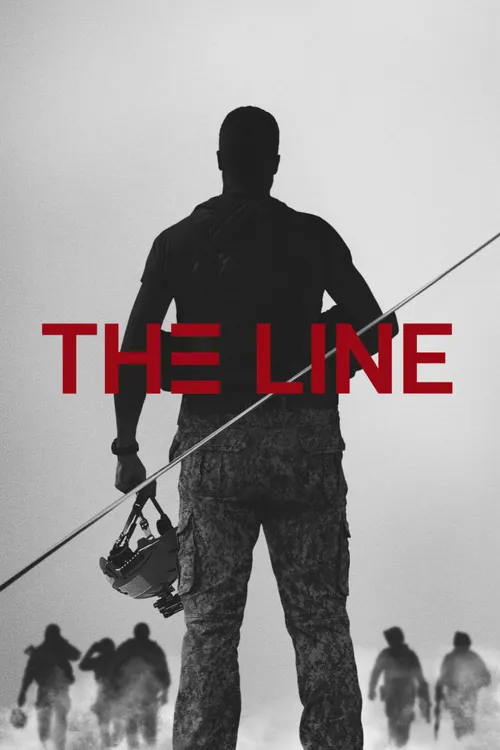



 TV SERIES · 2021
The Line
A documentary miniseries tracks the war-crimes accusations Navy SEALs leveled at their own chief, Eddie Gallagher, and the moral gray zones of modern combat that the case exposed.
The Line follows Navy SEAL Special Operations Chief Eddie Gallagher after members of his own platoon accuse him of war crimes stemming from a 2017 deployment in Iraq. The series reconstructs the unit’s operations against ISIS, the capture of an enemy fighter, and the specific allegations that Gallagher stabbed the wounded captive and committed other unlawful acts. Fellow SEALs describe internal tensions, reporting channels, and the decision to come forward against their leader. Investigators and prosecutors build a case that becomes one of the most closely watched military justice proceedings in years. Gallagher and his defenders contest the accounts, arguing the charges misrepresent battlefield realities and unit dynamics. The opening episodes establish the platoon’s hierarchy, the fog of covert warfare, and why the accusations fractured the team.
As the case moves toward trial, the series follows Gallagher’s legal team, family support including his wife Andrea, and the competing narratives offered by accusers and allies inside the SEAL community. Courtroom and hearing sequences detail evidence disputes, witness credibility fights, and the strain the prosecution places on special-operations culture. Command decisions, media attention, and political interest intensify pressure on everyone involved. Later chapters examine how the verdict and its aftermath reshape careers, reputations, and debates over rules of engagement. The docuseries keeps returning to the central question of where lawful force ends and criminal conduct begins when a platoon turns on its chief. It closes on the lasting personal and institutional fallout rather than a tidy moral verdict.
Oops! Is this show WOKE?
Only an account holder or member can file. Cite a scene, a line, or a pattern. Other account holders +1 or −1 that argument, once each. The show is not IS WOKE until enough of them have given a +1. Enough −1s remove the write-up, and it is no longer shown.
Sign in to file a woke label. One of each criterion per member.
Comments and reviews
Report a mistake
Same rule as woke labels: one report, a written reason, and the community +1 or −1 it — once per member. A net +5 applies the change. Editors can hold it for review, or apply it immediately.
No mistake reports yet.
Sign in to report a mistake. One report per field, per member.
Member review
Lila Marsh
Oct 20, 2026
6/10I put on The Line because the case had been floating around the edges of my memory for a few years and I wanted the version that wasn’t filtered through cable news sound bites. What you get is a documentary miniseries that stays pretty close to the ground: Navy SEALs from Eddie Gallagher’s own platoon accusing him of war crimes after a 2017 deployment in Iraq, the stabbing of a wounded ISIS fighter, the other alleged acts, the internal fight over whether to report their chief, and then the investigation and trial that turned into a national spectacle. It reconstructs the operations against ISIS without turning every firefight into a Hollywood set piece, and it lets the men talk about the weird pressure of being in a unit where loyalty and the law start pulling in opposite directions. What worked for me was how little it seemed to need a narrator telling me what to feel. The series gives time to the SEALs who came forward, the ones who stayed quiet longer, the investigators piecing the case together, and Gallagher and his side pushing back that the charges twisted what actually happens when you’re clearing houses and taking fire. You hear the friction inside the platoon—the personality clashes, the different thresholds for what counts as crossing a line, the fear that going outside the chain would wreck careers and reputations. That part feels honest. Combat isn’t a seminar, and the show doesn’t pretend the moral math is clean. Gray zones are the whole point, and it keeps returning to them without turning every scene into a lecture. I also appreciated that it didn’t flatten Gallagher into a cartoon villain or a framed saint. He’s presented as a highly decorated operator who some of his own guys genuinely believed had gone too far, and whose defenders argued the whole thing was a pile-on driven by personal grudges and rear-echelon standards that don’t survive contact. The trial coverage is thorough enough that you can see how witness statements shifted, how certain pieces of evidence landed or didn’t, and why the outcome left almost nobody fully satisfied. If you’ve ever sat through a workplace investigation that spiraled, the institutional mess will feel familiar even if the stakes here are life-and-death. Where it lost me a bit is the pacing and the sense of unfinished business. Some stretches lean hard on repeated interviews that circle the same points without adding much new texture. You get the allegations, the denials, the unit dynamics, then you get them again with slightly different framing. I didn’t need a second or third pass at the same tension once it was already clear. And while the series is good at showing how modern military justice collides with the realities of special operations, it sometimes stops just short of digging into the longer aftershocks—what the case did to trust inside SEAL teams, how reporting channels actually function when the accused is your own chief, what “good order and discipline” looks like when the cameras leave. Those questions sit there, acknowledged, but not always pressed. I rated it a 3 because it’s solid reporting on a messy story without becoming propaganda for either side, yet it never quite becomes essential. It’s the kind of documentary you watch, respect for the access and the refusal to simplify, and then set aside. I didn’t walk away angry or converted; I walked away thinking the case exposed real fractures in how we ask small groups of people to do ugly work under rules written far from the fight, and that those fractures are still there. If you already followed the headlines you won’t be shocked. If you didn’t, you’ll get a clearer picture of why so many people inside the community still argue about it. Either way, it’s worth the time if the subject interests you, just don’t expect it to settle the argument. It doesn’t try to. That’s both its strength and the reason it lands in the middle for me.