
 TV
 VIDEO GAMES
 PODCASTS
 VIDCASTS
 STAND-UP
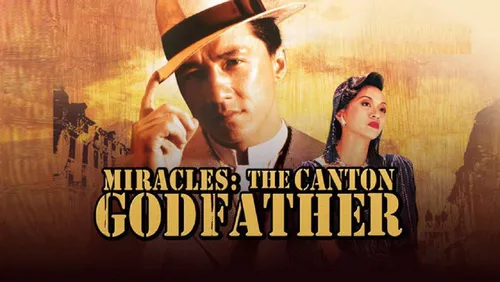



 MOVIE · 1989
Miracles: The Canton Godfather
A country boy becomes the head of a gang through the purchase of some lucky roses from an old lady.
He and a singer at the gang's nightclub try to do a good deed for the old lady when her daughter comes to visit. Kind-hearted country boy Kuo Cheng-Wah is cheated out of all his money by a man named Tung when he arrives in Hong Kong. Depressed and destitute, he encounters Madame Kao, a poor woman selling flowers on the street; she urges him to buy a red rose, saying it will bring him luck. He eventually agrees. His fortunes take a turn when he stumbles into a gang war, and renders assistance to a dying gang leader. When Fei asks who will take his spot, the gang leader unwittingly makes Kuo his successor and dies. Kuo attributes his luck to Madame Kao's rose, and takes to buying one from her every day thereafter. This does not sit well with the gang, especially Fei, who feels that he was next in line to be the boss. Uncle Hoi, the boss' right-hand man, helps Kuo adjust to being the boss. In a fight to test his toughness, Kuo wins the gang's respect, with the exception of Fei.
Kuo reluctantly accepts being a gangster boss and tries to find a different way to legitimately make a living for himself and his gang. When singer Yang Luming comes to him with money to pay off a debt the previous boss had loaned to her dad, Uncle Hoi comes up with the idea to open a nightclub. At the opening of the nightclub, rival boss Tiger arrives, hoping to muscle his way into half of the shares of the club. The police and Inspector Ho soon interrupt the show. In Kuo's office, Ho privately tells him his plan to bring both gangs to jail. Ho leaves Kuo with Uncle Hoi, who tells Kuo everyone knows what they talked about since Ho always uses the same lines. Before a meeting with Tiger, Kuo goes to buy his usual rose from Madame Kao, but she is not at her post. Because of this, he is caught up at a fight in a restaurant. The fight ends when Tiger stops a fan from falling on Kuo, who dives out of his way to
Oops! Is this show WOKE?
Only an account holder or member can file. Cite a scene, a line, or a pattern. Other account holders +1 or −1 that argument, once each. The show is not IS WOKE until enough of them have given a +1. Enough −1s remove the write-up, and it is no longer shown.
Sign in to file a woke label. One of each criterion per member.
Comments and reviews
Report a mistake
Same rule as woke labels: one report, a written reason, and the community +1 or −1 it — once per member. A net +5 applies the change. Editors can hold it for review, or apply it immediately.
No mistake reports yet.
Sign in to report a mistake. One report per field, per member.
Member review
June Pell
Sep 30, 2026
7/10Jackie Chan directing a film that tries to hold together slapstick fights, a gangster power struggle, and a quiet romance produces something more layered than most of his earlier work. The central thread starts with a country boy buying a rose from an old woman on the street and then finding himself named the new head of a gang after a chance encounter during a shootout. That single act of buying flowers every day afterward becomes both a habit and a quiet reminder that his position arrived through luck rather than planning. The direction shows real effort to move past the usual formula. Lavish nightclub sets and period details give the story a weight that pure comedy entries often skip. Action scenes still rely on Chan's preference for using whatever is nearby, yet they sit next to longer stretches where conversations and small decisions matter more. The shift in focus works best in the first half, where the new boss has to figure out how to appear in charge while others around him still hold the real strings. The singer at the club becomes the clearest influence on his gradual change. She does not simply push him toward better choices; her presence makes him notice how little control he actually has at the start. Watching him begin to act on his own rather than react to everyone else's moves gives the middle section its strongest moments. Those scenes carry more lasting interest than the bigger set pieces because they show the cost of staying in power. After the first hour the story adds several extra threads at once. The old woman's daughter arrives, the gang faces outside threats, and the daily rose ritual keeps running alongside everything else. The added material is not pointless, but it crowds the screen and makes some scenes feel rushed or split in too many directions. The attempt to balance repayment of a kindness with ongoing gang business ends up diluting the tension rather than deepening it. Even with that crowding, the central performance holds the film together. The lead moves from someone handed authority by accident to someone willing to accept what that authority requires. The change arrives in small steps rather than one turning point, and it feels consistent with the earlier scenes where he looked lost. The supporting cast fills out the world without needing to explain every motive out loud. The comedy never disappears entirely, yet it sits more in the background once the stakes rise. Bits that lean on the mismatch between a rural newcomer and city expectations still land cleanly. When the physical action returns it carries the same inventive timing, though it arrives less often and sometimes feels inserted to remind viewers of the usual Chan style. The luck motif runs through the whole picture without becoming the sole explanation for what happens. Choices start to matter more than the roses, which keeps the story from turning into a simple superstition tale. That balance is one reason the film stays watchable even when the plot strains under its own ambitions. It is easy to see why this stands as one of Chan's more serious attempts behind the camera, yet the extra layers also reveal where tighter focus would have helped. The result sits in an interesting middle ground. Enough of the experiment succeeds to make the runtime feel justified, but the stretches where the story tries to do too many things at once keep it from feeling fully settled. The character work and the way the action fits inside a larger frame are the parts that linger afterward.