
 TV
 VIDEO GAMES
 PODCASTS
 VIDCASTS
 STAND-UP



 MOVIE · 2026
Tuner
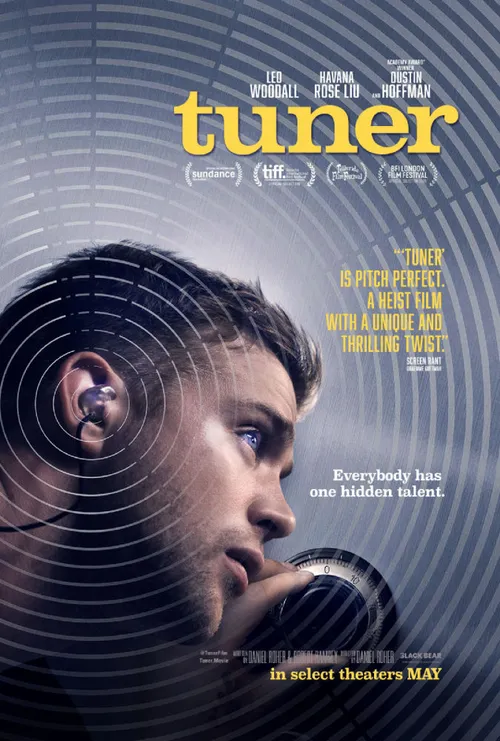
Tuner follows a gifted piano tuner whose precise skills with instruments unexpectedly extend to cracking safes and draw him into robbery and danger.
Er child prodigy managing hyperacusis with headphones, applies his hearing sensitivity to both piano tuning and theft. A mentor guides his early jobs while a romance develops amid the criminal turns. The story centers on his growing involvement in heists that test his technical abilities and personal limits.
As the tuner takes on larger thefts, the risks escalate and force choices between his musical world and the criminal one. Relationships with the mentor and romantic interest complicate his decisions during key robberies. The narrative tracks how his unique skills become both asset and liability in increasingly tense situations.
Oops! Is this show WOKE?
Only an account holder or member can file. Cite a scene, a line, or a pattern. Other account holders +1 or −1 that argument, once each. The show is not IS WOKE until enough of them have given a +1. Enough −1s remove the write-up, and it is no longer shown.
Sign in to file a woke label. One of each criterion per member.
Comments and reviews
Report a mistake
Same rule as woke labels: one report, a written reason, and the community +1 or −1 it — once per member. A net +5 applies the change. Editors can hold it for review, or apply it immediately.
No mistake reports yet.
Sign in to report a mistake. One report per field, per member.
Member review
Dan Reilly
Oct 16, 2026
8/10Tuner opens with a premise that should feel tighter than it does. Niki’s extreme sensitivity to sound is the engine of the whole thing, yet the early stretches lean too hard on showing us how much ordinary noise hurts him before the story trusts us to get it. Those scenes drag a little, and they make him look less sharp than the later safecracking work requires. You sit there waiting for the plot to stop explaining the gift and start using it. Once it does, the movie finds its footing, but that first half-hour asks for patience it hasn’t quite earned yet. What works better is the debt that actually pushes him. Harry’s hospital bill isn’t treated like a cute MacGuffin. It’s concrete and ugly, the kind of number that turns a decent guy into someone who will walk into a mansion at night and listen for tumblers. Niki isn’t the cleverest operator in the room, and the film doesn’t pretend he is. He’s easy to root for because he still has a heart under the risk, and because the tuning work keeps pulling him back toward the quiet rooms and the instruments he knows. That back-and-forth between pianos and locked metal is the real texture here. You feel the collision instead of just being told about it. Leo Woodall carries the physical side of the hearing condition without turning every scene into a performance of pain. You believe the flinch and the focus. Dustin Hoffman’s Harry gives the debt a face that matters; the older man isn’t a pure saint or a pure burden, just someone Niki won’t abandon. Lior Raz’s Uri and the crew around him treat Niki’s ears like a tool first and a person second, which is exactly how that kind of outfit would behave. The jobs themselves stay grounded in pressure and timing rather than cartoon heists. You watch Niki choose which scores to take and whom to trust, and those choices pile up in a way that feels earned instead of scheduled. The romance angle sits lightly enough that it doesn’t swamp the crime story, though a couple of quieter beats between the music world and the illegal one could have used one more pass for clarity. I kept wanting a sharper cut between the two lives instead of the soft dissolves the film sometimes prefers. Still, the moral weight lands without speeches. One’s disability can make someone uniquely useful, and wrong deeds don’t tidy themselves up just because the motive started clean. Tuner understands both without underlining them in neon. Where it nearly loses me is the middle stretch of crew politics. A few conversations about loyalty and the next job circle the same points longer than they need to. Niki’s growing reliance on the group is clear early; we don’t need three variations on the same warning. That padding is the main reason this sits at a strong four instead of something higher. Cut fifteen minutes of table talk and the whole machine would click harder. Credit where it’s due, though. Daniel Roher keeps the sound design honest. When Niki is working a safe, the movie lets silence and tiny metallic clicks do the work instead of drowning everything in score. That choice alone separates it from a dozen louder thrillers that forget what the premise actually is. The New York criminal world here feels small and specific rather than mythic. Niki becomes valuable because his ears solve a practical problem, not because the script needs a golden boy. The people he once served as a tuner keep showing up at the edges, a reminder of the ordinary life he’s endangering, and those brief collisions hit harder than most of the bigger set pieces. I went in skeptical of another “gifted outsider pulled into crime” story and came out mostly won over by how personal the stake stays. The medical debt never becomes abstract. Harry’s situation keeps Niki moving even when the smarter play would be to walk away. You can see the young man calculating risk against loyalty in real time, and the film respects that calculation enough not to turn every decision into a monologue. By the time the jobs start compounding, the pressure feels genuine. It isn’t flawless. The early hand-holding around the hearing condition and the occasional drag in the crew scenes keep it from being airtight. But the core idea—someone whose greatest limitation becomes the thing others want most—holds up, and the performances give it weight without begging for it. Tuner trusts the quiet more often than it trusts the noise, which is the right instinct for a movie built around a man who hears too much. I rated it four because the parts that work are solid and specific, and the parts that don’t are fixable rather than fatal. It’s a crime story that remembers the instruments and the people attached to them, and that memory is what stuck with me after the safes were closed again.